

Product Overview
Coconut is a globally significant tropical fruit widely traded for both fresh consumption and industrial use. It is valued for its versatility, with applications ranging from culinary use to processing into oil, milk, and other by-products. Coconuts are marketed in various forms, including whole mature nuts and young tender coconuts, making them an important commodity in both retail and food service sectors.
Key Characteristics
Coconuts are large, oval to round fruits with a hard outer shell covered by a fibrous husk. Inside, they contain coconut water and white edible flesh. Mature coconuts have thicker, firm flesh, while young coconuts contain more water and softer flesh. Flavor is mildly sweet and nutty. Coconuts are non-climacteric and do not ripen further after harvest.
Nutritional Value
Coconuts provide healthy fats, particularly medium-chain triglycerides (MCTs). They are a source of dietary fiber and contain minerals such as potassium, magnesium, and iron. Coconut water offers hydration with electrolytes, while the flesh provides energy due to its fat content.
Seasonality and Origin
Coconuts are grown in tropical regions and are available year-round due to continuous production cycles. Major producing countries include Indonesia, the Philippines, India, Sri Lanka, and Brazil. Their wide cultivation ensures consistent availability in global markets.
Common Applications
• Fresh consumption (tender coconut water and flesh)
• Cooking and curries
• Coconut milk and cream
• Baking and desserts
• Oil extraction
• Processed food products
Storage and Handling
Proper handling depends on the form and maturity of the coconut.
• Recommended storage temperature: 50°F to 55°F
• Relative humidity: 80–85%
• Shelf life:
- Mature coconuts: Several weeks
- Young coconuts: 1–2 weeks
• Store in a cool, dry, and well-ventilated area
• Avoid excessive moisture to prevent mold growth
• Handle carefully to prevent cracking
• Refrigerate once opened
Origin and Background
Coconuts are believed to have originated in the Indo-Pacific region and have been cultivated for thousands of years. They spread globally through ocean currents and human trade. Today, coconuts are a vital agricultural crop in tropical economies, with extensive use in food, cosmetics, and industrial products.
Grades and Quality Standards
Extra Fancy Grade
• Uniform size and shape
• Clean, intact shell with no cracks
• Fresh, high-quality water and flesh
Fancy Grade
• Minor variations in size and appearance
• Slight surface imperfections allowed
• Suitable for retail distribution
Commercial / Processing Grade
• Visible external defects permitted
• Maintains internal quality
• Used for oil extraction and processed products
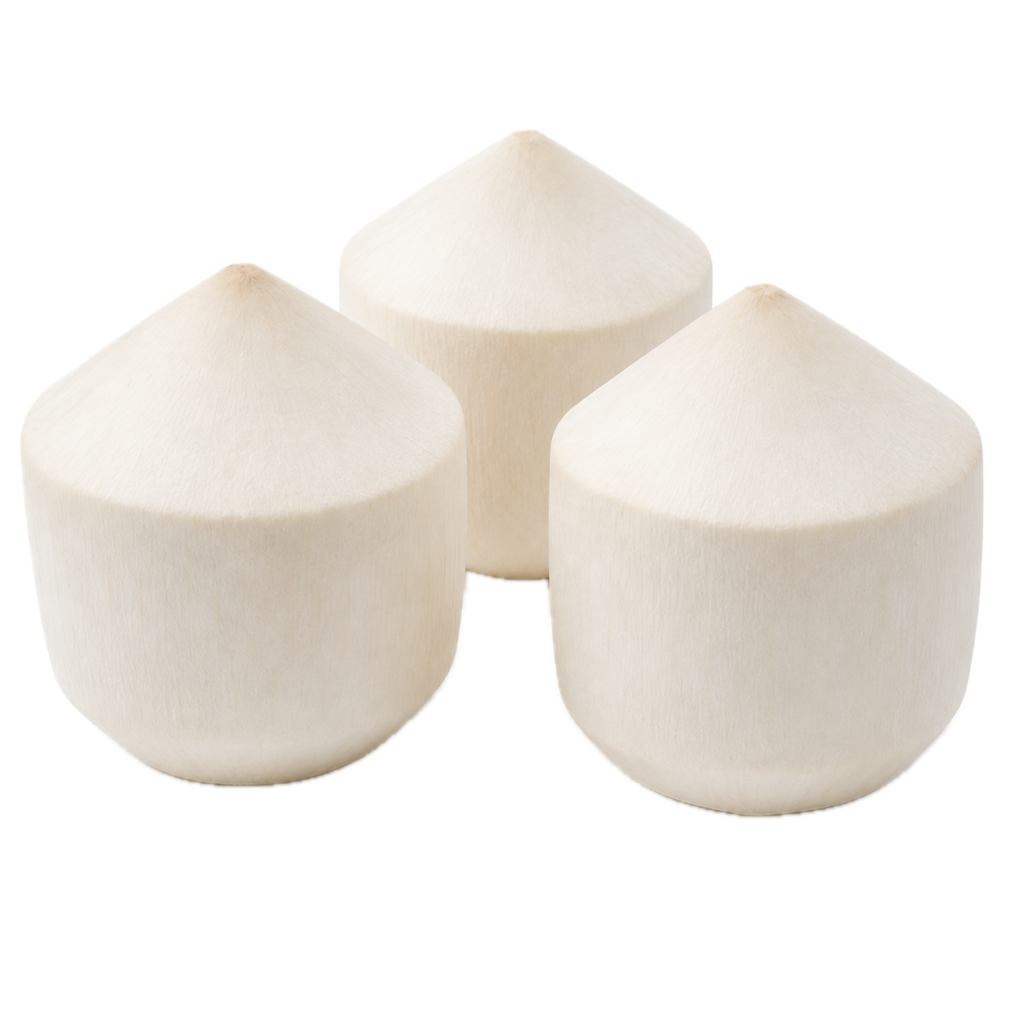
Young
Harvested before full maturity and valued for its abundant coconut water and soft, jelly-like flesh. It has a mildly sweet flavor and is commonly used for fresh consumption and beverages.
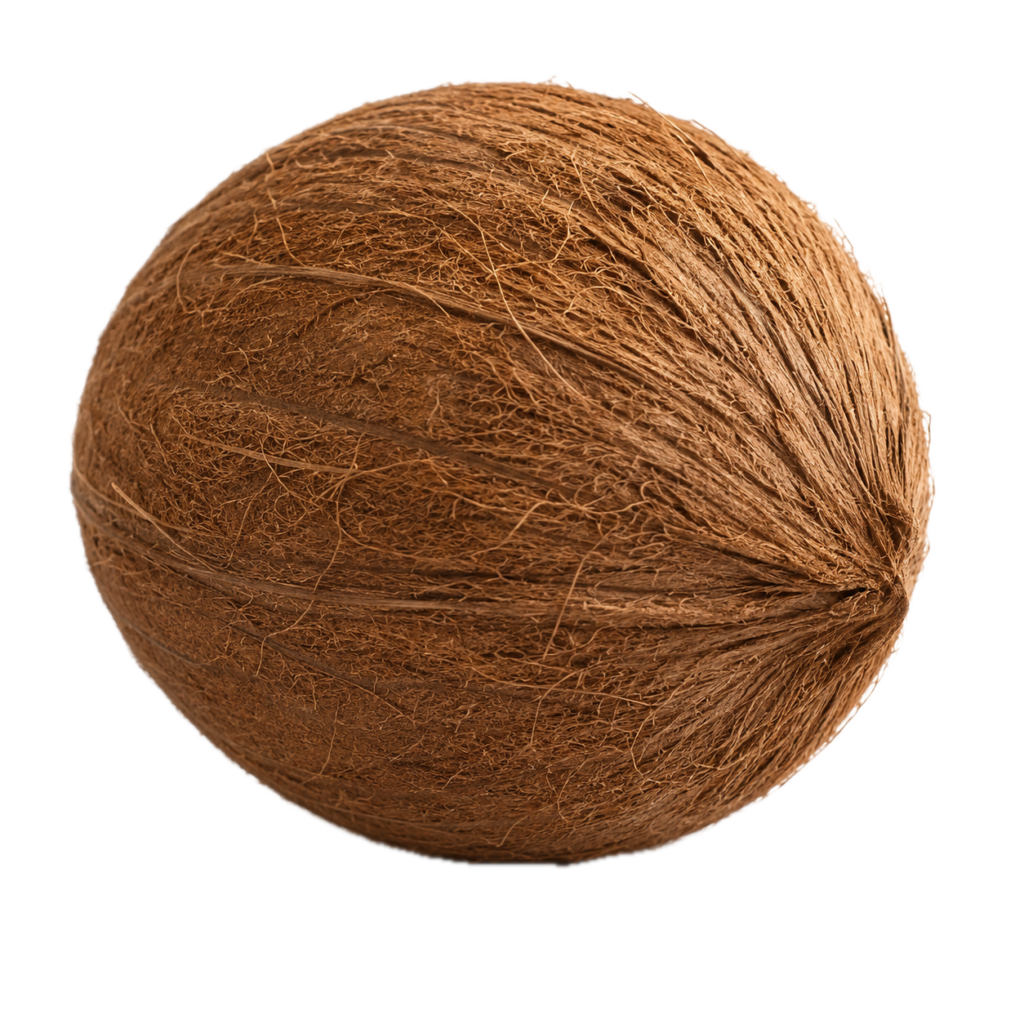
Brown
A mature coconut with a hard brown shell and thick white flesh. It contains less water than young coconuts and is widely used for fresh consumption, coconut milk, baking, and processing applications.
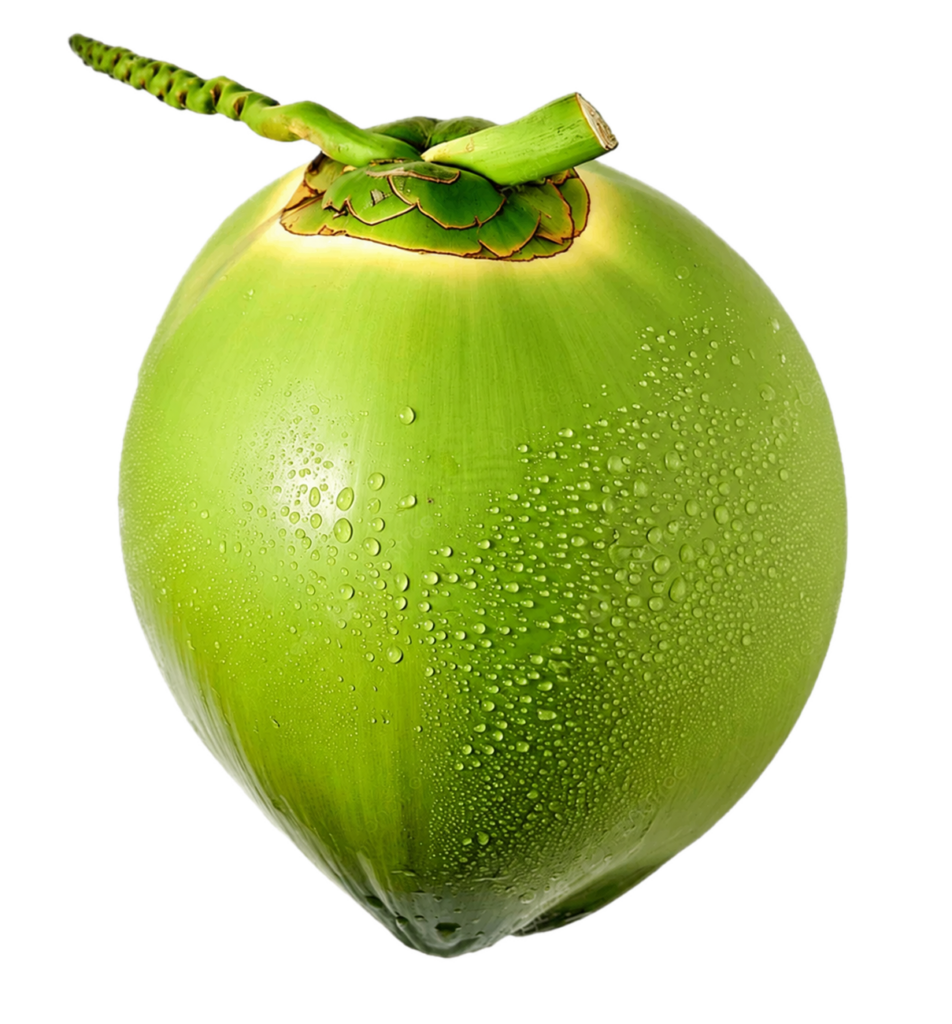
Green
An immature coconut harvested with its natural green outer husk intact. It contains a high volume of refreshing coconut water and soft flesh, making it popular for hydration and fresh consumption.
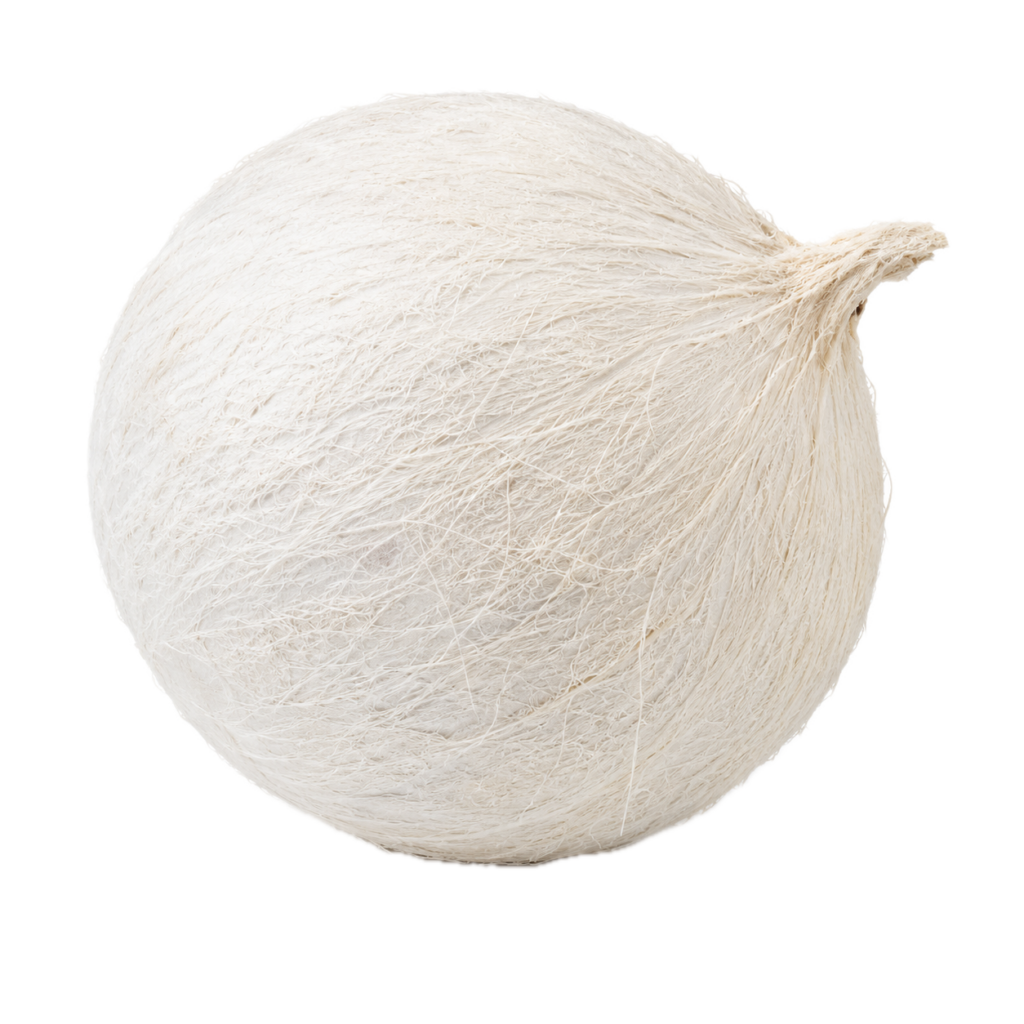
White
A mature coconut that has had its fibrous outer husk removed, leaving a clean white exterior. It contains firm white flesh and coconut water and is commonly sold in retail markets for convenience and presentation.