
Product Overview
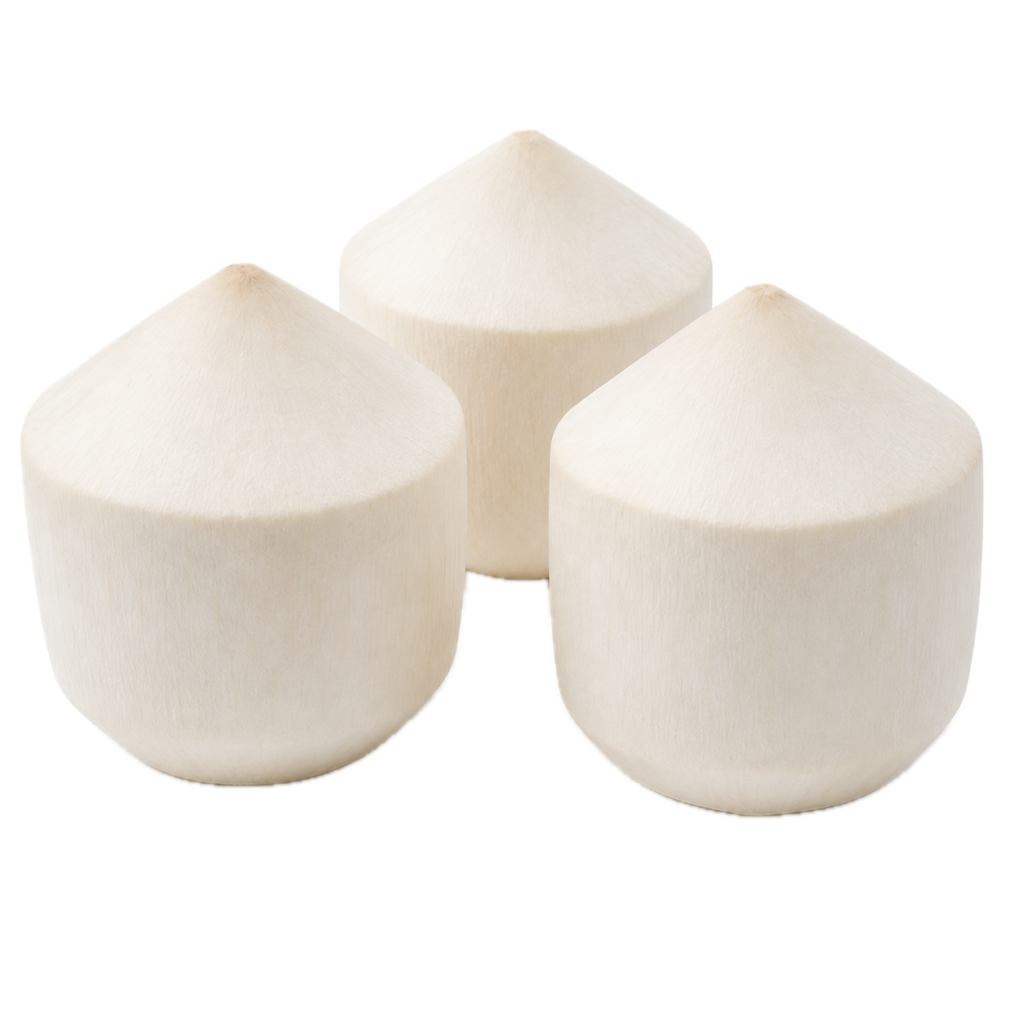
Young coconut is a tropical fruit harvested before full maturity, valued for its refreshing coconut water and soft edible flesh. It is a significant commodity in fresh produce and beverage markets, serving retail, food service, and hospitality sectors. Young coconuts are widely marketed for their hydration benefits and natural flavor.
Key Characteristics
Young coconuts are harvested while the shell is still immature and are typically trimmed into a round or diamond shape for retail presentation. The outer husk is green, white, or light beige after trimming. Inside, they contain a large volume of clear coconut water and a thin layer of soft, jelly-like flesh. Flavor is mildly sweet and refreshing. Young coconuts are non-climacteric and do not ripen after harvest.
Nutritional Value
Young coconut water provides electrolytes such as potassium, sodium, and magnesium. The fruit also contains vitamin C, small amounts of B vitamins, and natural sugars. The soft flesh provides dietary fiber and healthy fats.
Seasonality and Origin
Young coconuts are grown in tropical regions and are available year-round due to continuous production. Major producing countries include Thailand, Indonesia, the Philippines, India, Vietnam, and Sri Lanka. Global demand supports extensive international trade.
Common Applications
• Fresh consumption
• Coconut water beverages
• Smoothies and drinks
• Desserts and confectionery
• Culinary preparations
• Hospitality and foodservice use
Storage and Handling
Proper handling is essential to preserve freshness and coconut water quality.
• Recommended storage temperature: 34°F to 38°F
• Relative humidity: 85–90%
• Shelf life: 2–4 weeks under optimal conditions
• Keep refrigerated whenever possible
• Avoid direct sunlight and excessive heat
• Handle carefully to prevent cracking and leakage
• Maintain sanitation to prevent microbial contamination
Origin and Background
Coconuts originated in tropical coastal regions of Southeast Asia and the Pacific. Young coconuts have been consumed for centuries as a natural source of hydration. Today, they are widely marketed globally due to increasing demand for fresh tropical fruits and natural beverages.
Grades and Quality Standards
Extra Fancy Grade
• Uniform size, shape, and trimmed appearance
• High volume of clear coconut water
• Free from cracks, bruising, and defects
Fancy Grade
• Slight variations in size and appearance
• Minor cosmetic imperfections allowed
• Suitable for retail distribution
Commercial / Processing Grade
• Visible defects permitted
• Maintains internal quality
• Used for beverage extraction and processing applications