
Product Overview
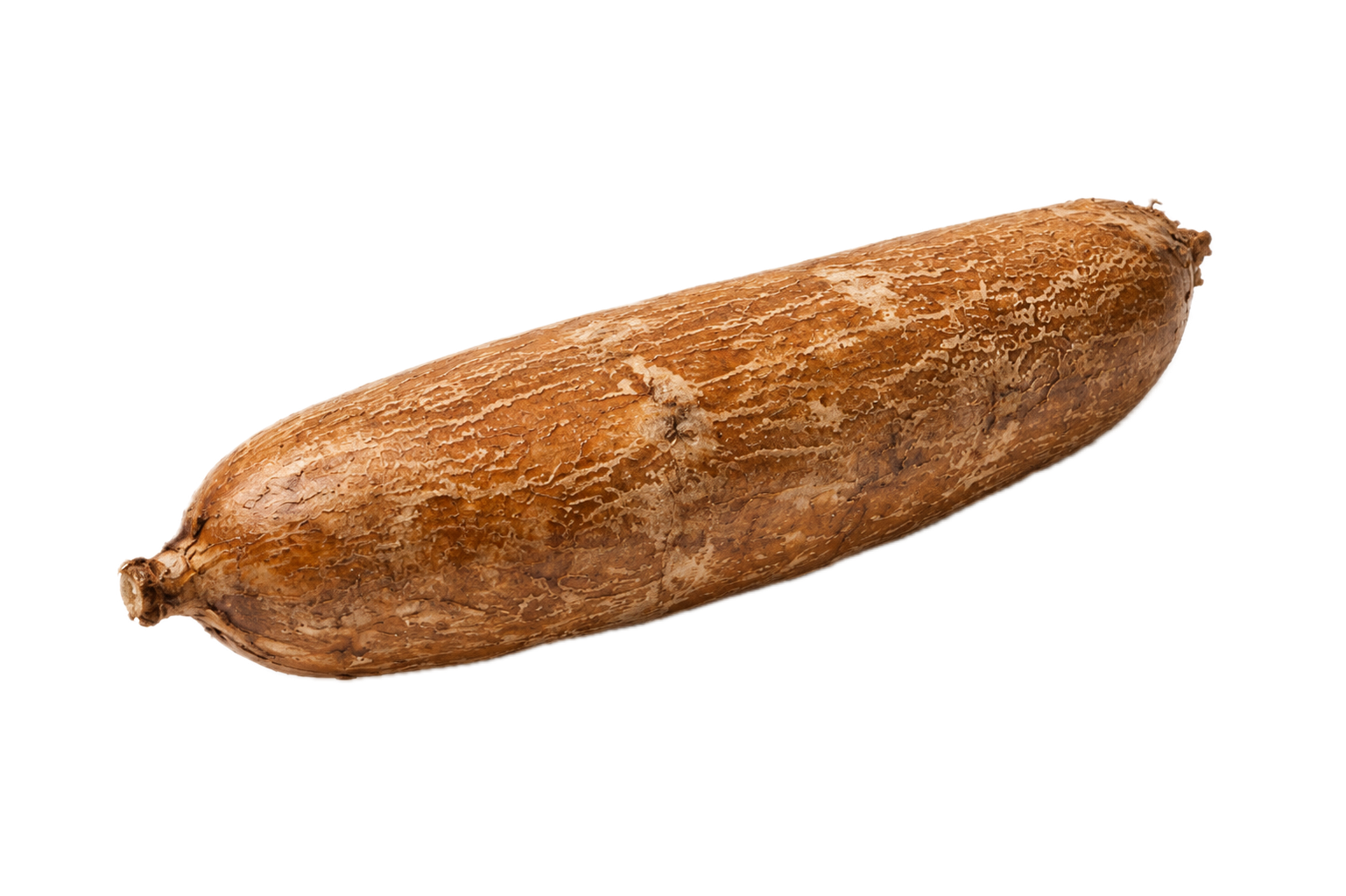
Yuca, also known as cassava, is a staple tropical root crop widely traded in fresh and processed markets. It is valued for its high carbohydrate content, versatility, and importance in global food systems. Yuca is commonly used in both retail and food service sectors, particularly in Latin American, African, and Asian cuisines.
Key Characteristics
Yuca consists of long, cylindrical roots with a thick, rough brown outer skin and white to cream-colored interior flesh. The texture is firm and starchy when raw and becomes soft and slightly fibrous when cooked. Flavor is mild and neutral. Yuca must be properly peeled and cooked before consumption. It is non-climacteric and does not ripen after harvest.
Nutritional Value
Yuca is rich in carbohydrates and provides dietary energy. It contains dietary fiber and offers vitamin C along with small amounts of B vitamins. It also provides minerals such as potassium. Yuca is naturally gluten-free and widely used as an alternative starch source.
Seasonality and Origin
Yuca is grown in tropical and subtropical regions and is available year-round due to continuous cultivation. Major producing countries include Nigeria, Thailand, Indonesia, Brazil, and the Democratic Republic of Congo. Its widespread cultivation ensures consistent availability in global markets.
Common Applications
• Boiling and frying
• Chips and snacks
• Flour and starch production (tapioca)
• Soups and stews
• Traditional dishes
• Processed food products
Storage and Handling
Proper handling is essential due to its susceptibility to deterioration after harvest.
• Recommended storage temperature: 45°F to 50°F
• Relative humidity: 85–90%
• Shelf life: 1–2 weeks under optimal conditions
• Store in a cool, dry, well-ventilated area
• Avoid excessive moisture to prevent decay
• Handle carefully to prevent cuts and bruising
• Refrigerate once peeled or cut
Origin and Background
Yuca is believed to have originated in South America and has been cultivated for thousands of years. It spread globally through trade and is now a staple food in many tropical regions. Modern production focuses on improving yield, disease resistance, and processing quality.
Grades and Quality Standards
Extra Fancy Grade
• Uniform size and shape
• Clean, intact skin with minimal damage
• Firm texture with no signs of decay
Fancy Grade
• Slight variations in size and appearance
• Minor surface imperfections allowed
• Suitable for retail distribution
Commercial / Processing Grade
• Visible defects permitted
• May include irregular shapes or surface damage
• Used for processing and industrial applications