
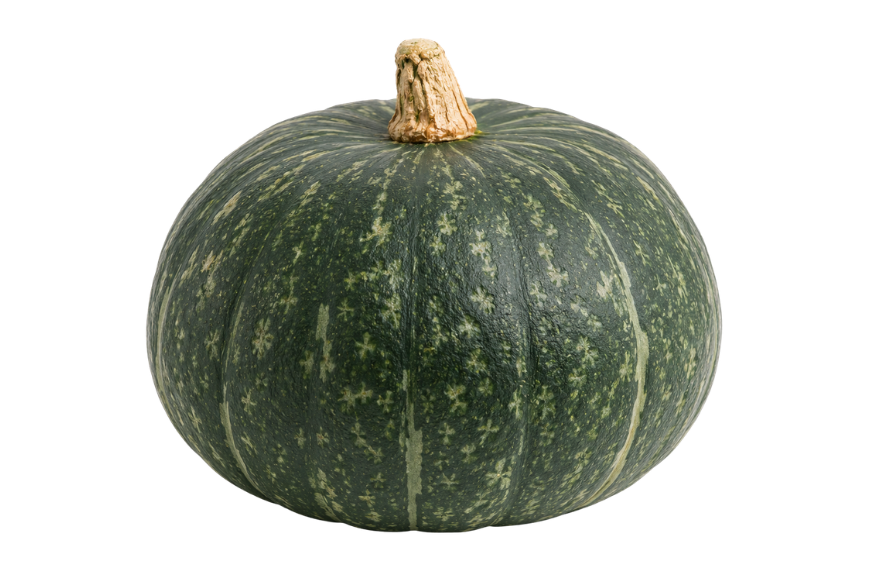
Product Overview
Kabocha squash, commonly known as Japanese pumpkin, is a winter squash widely traded in fresh produce markets. It is valued for its sweet flavor, dense texture, and versatility in cooking. Kabocha is an important commodity in both retail and food service sectors, particularly in Asian and fusion cuisines.
Key Characteristics
Kabocha squash is round to slightly flattened with a hard, dark green rind that may have lighter green stripes or patches. The flesh is deep yellow to orange, dense, and becomes smooth and fluffy when cooked. Flavor is sweet and rich, often compared to a combination of pumpkin and sweet potato. The skin is edible when cooked. Kabocha is non-climacteric and does not ripen further after harvest.
Nutritional Value
Kabocha squash is rich in vitamin A (as beta-carotene) and provides vitamin C and dietary fiber. It contains antioxidants and essential minerals such as potassium and iron. It is low in fat and supports overall nutritional health.
Seasonality and Origin
Kabocha squash is grown in temperate regions and is typically harvested in late summer through fall. Major production regions include Japan, the United States, Mexico, and parts of Asia. Due to its good storage capability, it is available in markets for extended periods.
Common Applications
• Roasting and baking
• Soups and purees
• Tempura and frying
• Stews and curries
• Side dishes
• Traditional Asian cuisine
Storage and Handling
Proper storage helps maintain quality and extend shelf life.
• Recommended storage temperature: 50°F to 55°F
• Relative humidity: 50–70%
• Shelf life: 1–3 months under optimal conditions
• Store in a cool, dry, and well-ventilated area
• Avoid excessive moisture to prevent decay
• Handle carefully to prevent rind damage
• Do not refrigerate for extended periods
Origin and Background
Kabocha squash originated in Japan, where it was developed from earlier squash varieties introduced from the Americas. It has become a staple in Japanese cuisine and is now widely cultivated globally. Modern production focuses on improving sweetness, texture, and storage life.
Grades and Quality Standards
Extra Fancy Grade
• Uniform size, shape, and dark green color
• Hard rind free from defects
• Dense, well-developed flesh
Fancy Grade
• Slight variations in size and appearance
• Minor surface imperfections allowed
• Suitable for retail distribution
Commercial / Processing Grade
• Visible defects permitted
• May include irregular shapes or surface damage
• Used for processing and bulk applications