
Product Overview
Pineapple is a major tropical fruit widely traded in global markets, valued for its sweet flavor, juiciness, and versatility. It is marketed both fresh and processed, making it an important commodity in retail and food service sectors. Pineapple is known for its consistent demand and availability from multiple producing regions.
Key Characteristics
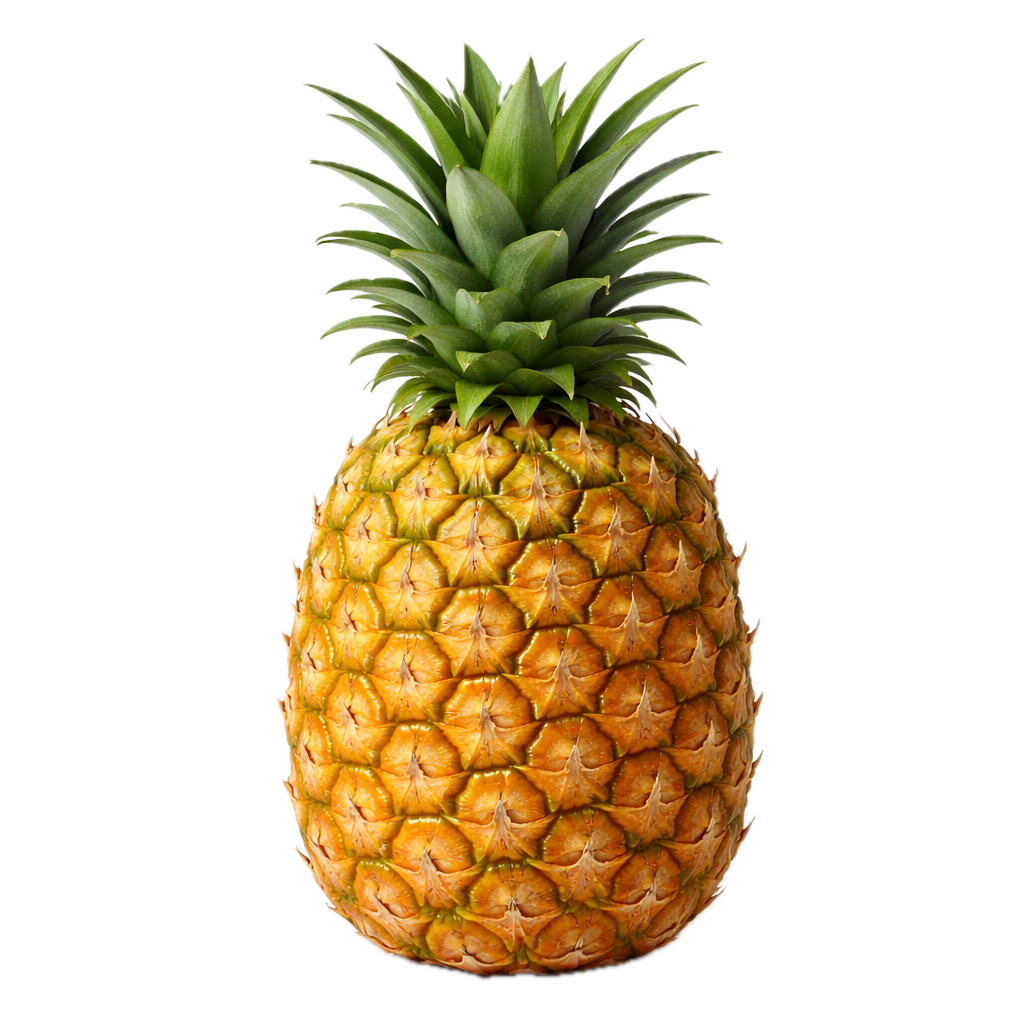
Pineapple is a large, cylindrical fruit with a rough, spiny outer skin and a crown of stiff green leaves. The flesh is golden yellow, juicy, and fibrous with a sweet-tart flavor. The core is firmer and less juicy than the surrounding flesh. Pineapples are non-climacteric fruits and do not ripen further after harvest.
Nutritional Value
Pineapple is rich in vitamin C and provides dietary fiber. It contains bromelain, an enzyme associated with digestive benefits. Pineapple also offers antioxidants and small amounts of manganese, contributing to overall health.
Seasonality and Origin
Pineapple is grown in tropical regions and is available year-round due to continuous production cycles. Major producing countries include Costa Rica, the Philippines, Thailand, Indonesia, and India. Its global cultivation ensures consistent supply in international markets.
Common Applications
• Fresh consumption
• Juices and beverages
• Desserts and confectionery
• Salads and fruit mixes
• Cooking and grilling
• Canning and processing
Storage and Handling
Proper handling is essential to maintain quality and prevent spoilage.
• Recommended storage temperature: 45°F to 50°F
• Relative humidity: 85–90%
• Shelf life: 1–2 weeks under optimal conditions
• Store upright to prevent damage
• Avoid exposure to very low temperatures
• Handle carefully to prevent bruising
• Refrigerate once cut
Origin and Background
Pineapple originated in South America, particularly in regions of Brazil and Paraguay, and was spread globally through exploration and trade. It is now widely cultivated in tropical climates. Modern production focuses on improving sweetness, uniformity, and shelf life for export markets.
Grades and Quality Standards
| U.S. Grade Standards | Days Since Shipment | % of Defects Allowed | Optimum Transit Temp. (°F) |
| 12-6-2 | 5 4 3 2 1 | 15-8-4 14-8-4 13-7-3 13-6-2 12-6-2 | 50-55° (green) 45° (ripe) |
Extra Fancy Grade
• Uniform size and shape with well-developed crown
• Bright, fresh appearance with good color
• Free from defects, bruising, and decay
Fancy Grade
• Slight variations in size and appearance
• Minor surface imperfections allowed
• Suitable for retail distribution
Commercial / Processing Grade
• Visible defects permitted
• May include irregular shape or surface damage
• Used for canning, juice, and processing applications