
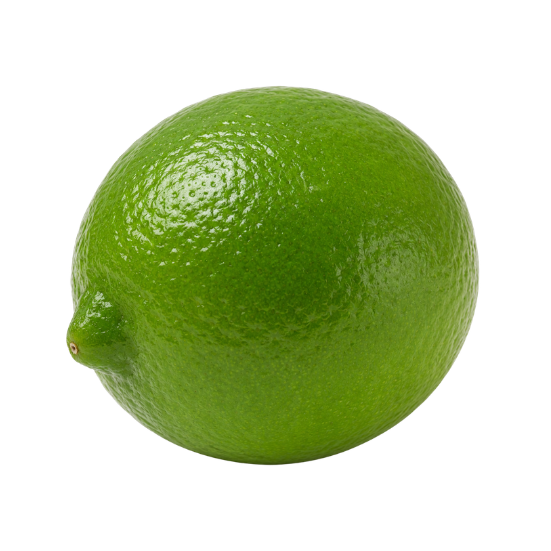
Product Overview
Key lime is a small citrus fruit widely valued for its intense aroma, high acidity, and distinctive flavor. It is an important commodity in both fresh and processed markets, particularly in culinary and beverage applications. Key limes are commonly used for juice extraction and flavoring, making them a staple in retail and food service sectors.
Key Characteristics
Key limes are small, round fruits with thin, smooth skin that ranges from deep green to yellow when fully mature. The flesh is pale green to yellow, juicy, and highly acidic. They typically contain seeds and have a strong, aromatic citrus fragrance. Flavor is more intense and tart compared to common Persian limes. Key limes are non-climacteric and do not ripen further after harvest.
Nutritional Value
Key limes are rich in vitamin C and provide antioxidants that support immune health. They contain small amounts of dietary fiber and essential minerals such as potassium. Their high acidity contributes to their culinary and preservative uses.
Seasonality and Origin
Key limes are grown in tropical and subtropical regions. Major production areas include Mexico, the Caribbean, and parts of Central America. They are available for most of the year due to continuous cultivation cycles, with peak availability depending on regional harvest patterns.
Common Applications
• Juices and beverages
• Culinary flavoring and marinades
• Desserts (such as key lime pie)
• Sauces and dressings
• Seafood and savory dishes
• Preserving and pickling
Storage and Handling
Proper handling is important to maintain freshness and juice quality.
• Recommended storage temperature: 50°F to 55°F
• Relative humidity: 85–90%
• Shelf life: 1–2 weeks under optimal conditions
• Store in a cool, well-ventilated area
• Avoid excessive moisture to prevent decay
• Handle carefully to prevent skin damage
• Refrigerate to extend shelf life
Origin and Background
Key lime is believed to have originated in Southeast Asia and was later spread to the Caribbean and the Americas through trade. It became widely cultivated in tropical regions and is closely associated with regional cuisines. Modern production focuses on maintaining flavor intensity, yield, and disease resistance.
Grades and Quality Standards
| U.S. Grade Standards | Days Since Shipment | % of Defects Allowed | Optimum Transit Temp. (°F) |
| 10-5-3 | 5 4 3 2 1 | 15-8-5 14-8-5 13-7-4 11-6-3 10-5-3 | 48-50° |
Extra Fancy Grade
• Uniform size, shape, and color
• Smooth skin free from blemishes
• High juice content and proper maturity
Fancy Grade
• Slight variations in size and appearance
• Minor surface imperfections allowed
• Suitable for retail distribution
Commercial / Processing Grade
• Visible defects permitted
• May include skin blemishes or irregular shape
• Used for juice extraction and processing applications