
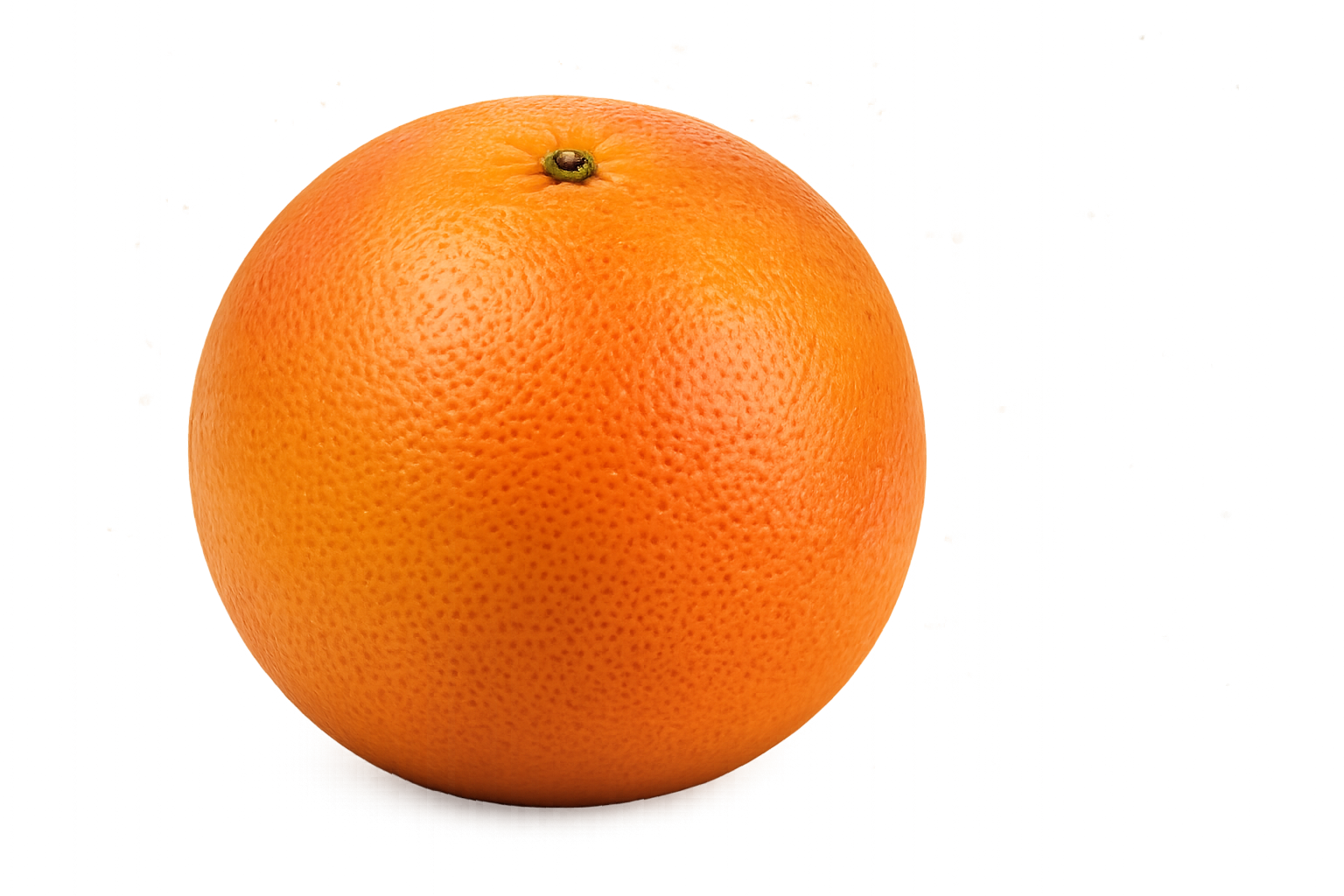
Product Overview
Grapefruit is a widely traded citrus fruit valued for its refreshing flavor, juiciness, and nutritional benefits. It is marketed primarily for fresh consumption and juice production, making it an important commodity in both retail and food service sectors. Grapefruit is known for its balance of sweetness and acidity, contributing to its strong consumer demand.
Key Characteristics
Grapefruit is a large, round citrus fruit with a smooth to slightly textured rind that ranges in color from yellow to pinkish hues. The internal flesh varies from pale yellow to deep pink or red depending on the variety. The segments are juicy with a flavor that ranges from mildly sweet to tart and slightly bitter. Grapefruit is non-climacteric and does not ripen further after harvest.
Nutritional Value
Grapefruit is rich in vitamin C and provides dietary fiber. It contains antioxidants such as lycopene (in red varieties) and flavonoids. Grapefruit also offers potassium and is low in calories, making it suitable for balanced diets.
Seasonality and Origin
Grapefruit is grown in subtropical regions. In the United States, major production occurs in Florida, Texas, California, and Arizona, with peak availability during winter and early spring. Globally, key producers include China, South Africa, Mexico, and Israel. Due to multiple growing regions, grapefruit is available for extended periods in global markets.
Common Applications
• Fresh consumption
• Juices and beverages
• Salads and fruit mixes
• Desserts and culinary dishes
• Breakfast preparations
• Processing and flavoring
Storage and Handling
Proper handling is important to maintain juiciness and quality.
• Recommended storage temperature: 45°F to 50°F
• Relative humidity: 85–90%
• Shelf life: 2–3 weeks under optimal conditions
• Store in a cool, well-ventilated area
• Handle carefully to prevent rind damage
• Avoid prolonged exposure to high temperatures
• Refrigerate to extend freshness
Origin and Background
Grapefruit is believed to have originated in the Caribbean as a natural hybrid between pomelo and orange. It gained commercial importance in the 19th century and is now widely cultivated in subtropical regions worldwide. Modern production focuses on improving sweetness, color, and yield for global markets.
Grades and Quality Standards
| U.S. Grade Standards | Days Since Shipment | % of Defects Allowed | Optimum Transit Temp. (°F) |
| 12 [7 VSD]-3 | 5 4 3 2 1 | 15-[8 VSD]-5 15-[8 VSD]-5 14-[8 VSD]-4 13-[7 VSD]-4 12-[7 VSD]-3 | 58-60° |
Extra Fancy Grade
• Uniform size, shape, and color
• Smooth rind with minimal defects
• Good internal quality and juiciness
Fancy Grade
• Slight variations in size and appearance
• Minor surface imperfections allowed
• Suitable for retail distribution
Commercial / Processing Grade
• Visible defects permitted
• May include rind blemishes or irregular shape
• Used for juice and processing applications