
Product Overview
Chinese daikon is a large root vegetable belonging to the radish family and is widely used throughout East Asian cuisine. It is valued for its mild flavor, crisp texture, and versatility in fresh and cooked applications. Chinese daikon is an important commodity in retail, food service, and produce markets.
Key Characteristics
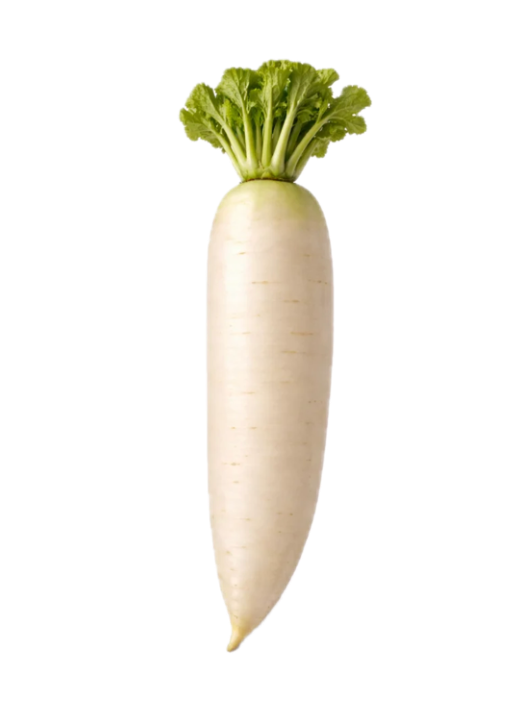
Chinese daikon is long, cylindrical, and white in color with smooth skin and firm, juicy flesh. It is typically larger and thicker than common radishes. The flavor is mild, slightly sweet, and less pungent than traditional red radishes. Chinese daikon is non-climacteric and does not ripen after harvest.
Nutritional Value
Chinese daikon is low in calories and provides dietary fiber, vitamin C, folate, and potassium. It contains antioxidants and beneficial plant compounds while maintaining a high water content, making it a nutritious and refreshing vegetable.
Seasonality and Origin
Chinese daikon is grown in temperate regions and is available year-round through staggered planting and storage programs. Major production regions include China, Taiwan, Korea, Japan, and Southeast Asia. Its excellent storage capability supports continuous market availability.
Common Applications
• Soups and broths
• Stir-fries
• Pickling
• Braised dishes
• Fresh salads
• Traditional Chinese cuisine
Storage and Handling
Proper handling is essential to maintain freshness and crispness.
• Recommended storage temperature: 32°F to 36°F
• Relative humidity: 95–100%
• Shelf life: 2–4 weeks under optimal conditions
• Store in moisture-retentive packaging
• Keep refrigerated at all times
• Handle carefully to prevent bruising and cracking
• Remove tops before long-term storage if attached
Origin and Background
Chinese daikon has been cultivated in East Asia for centuries and is one of the most important root vegetables in Chinese cuisine. It is valued for its adaptability, yield, and culinary versatility. Modern production focuses on root uniformity, flavor quality, and storage performance.
Grades and Quality Standards
Extra Fancy Grade
• Uniform size, shape, and white coloration
• Smooth skin free from cracks and defects
• Firm, crisp texture
Fancy Grade
• Slight variations in size and appearance
• Minor cosmetic imperfections allowed
• Suitable for retail distribution
Commercial / Processing Grade
• Visible defects permitted
• Maintains internal quality
• Used for processing, pickling, and bulk foodservice applications.