
Product Overview
Collard greens are a widely consumed leafy vegetable, valued for their nutritional benefits, hearty texture, and versatility in cooking. They are an important commodity in fresh produce markets, particularly in Southern U.S., African, and traditional cuisines. Collard greens are marketed fresh in bunches and are commonly used in both retail and food service sectors.
Key Characteristics
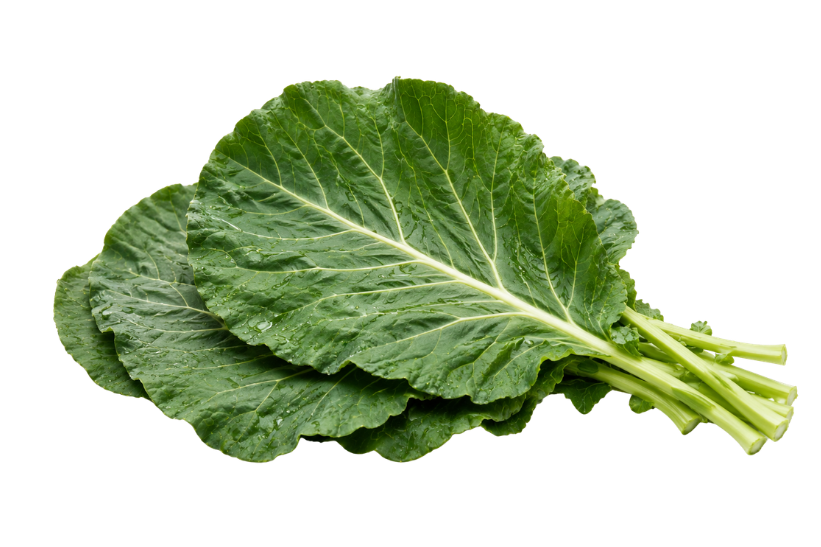
Collard greens consist of large, flat, dark green leaves with thick stems. The leaves are sturdy and slightly coarse compared to other leafy greens. Flavor is mildly bitter and earthy, becoming more tender and flavorful when cooked. Collard greens are non-climacteric and do not continue to develop after harvest.
Nutritional Value
Collard greens are highly nutritious and rich in vitamins A, C, and K. They provide dietary fiber, calcium, and antioxidants. They also contain folate and small amounts of iron, contributing to overall health and dietary balance.
Seasonality and Origin
Collard greens are grown in temperate climates and are available year-round due to staggered planting cycles. Major production regions include the United States, particularly in southern states, as well as parts of Europe and Africa. They are commonly harvested during cooler seasons but are widely available through continuous cultivation.
Common Applications
• Boiled or braised dishes
• Soups and stews
• Sautéed preparations
• Traditional Southern cuisine
• Side dishes
• Wraps and healthy preparations
Storage and Handling
Proper storage is essential to maintain freshness and prevent wilting.
• Recommended storage temperature: 32°F to 36°F
• Relative humidity: 95–100%
• Shelf life: 5–7 days under optimal conditions
• Store in moisture-retentive packaging
• Keep refrigerated to prevent wilting
• Avoid exposure to ethylene-producing commodities
• Handle gently to prevent leaf damage
Origin and Background
Collard greens are believed to have originated in the Mediterranean region and have been cultivated for centuries. They are closely related to cabbage and kale. Over time, they became a staple in various cuisines, particularly in Southern United States cooking. Modern cultivation focuses on improving leaf yield, tenderness, and resistance to environmental stress.
Grades and Quality Standards
Extra Fancy Grade
• Large, dark green leaves with fresh appearance
• Free from yellowing, wilting, and damage
• Clean, well-trimmed bunches
Fancy Grade
• Slight variations in leaf size and color
• Minor imperfections allowed
• Suitable for retail distribution
Commercial / Processing Grade
• Visible defects permitted
• May include older or slightly damaged leaves
• Used for cooking and bulk applications