
Product Overview
Cauliflower is a widely consumed cruciferous vegetable valued for its compact head, mild flavor, and versatility in both fresh and processed markets. It is a key commodity in global produce supply chains, used across retail, food service, and industrial applications. Cauliflower is commonly consumed raw, cooked, and processed into a variety of value-added products.
Key Characteristics
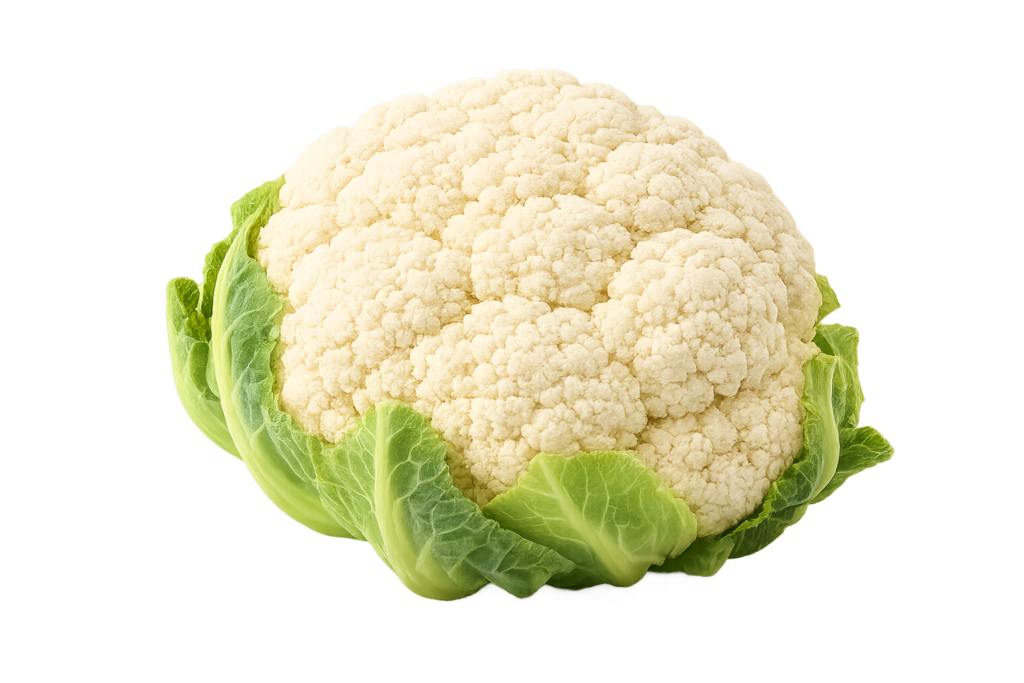
Cauliflower consists of a dense, compact head (curd) made up of tightly packed florets attached to a central stem. The most common color is white, though other variations exist. Texture is firm and slightly grainy when raw, becoming tender when cooked. Flavor is mild, slightly nutty, and adaptable to various seasonings and cooking methods.
Nutritional Value
Cauliflower is a good source of vitamin C, vitamin K, and dietary fiber. It also contains antioxidants and beneficial plant compounds such as glucosinolates. Low in calories and carbohydrates, it is widely used in health-focused and low-carb diets.
Seasonality and Origin
Cauliflower is grown in temperate climates worldwide, with major production in countries such as China, India, the United States, and Spain. It is cultivated in multiple seasons and is available year-round through global distribution networks.
Common Applications
• Steaming and boiling
• Roasting and grilling
• Stir-fries and curries
• Soups and purees
• Low-carb alternatives (rice, mash, crusts)
• Pickling and processing
Storage and Handling
Proper storage is essential to maintain freshness and prevent spoilage.
• Recommended storage temperature: 32°F to 34°F
• Relative humidity: 90–95%
• Store in perforated packaging to allow airflow
• Keep refrigerated to maintain firmness
• Avoid exposure to ethylene-producing produce
• Handle carefully to prevent bruising and discoloration
Origin and Background
Cauliflower is believed to have originated in the Mediterranean region and has been cultivated for centuries. It has gained global popularity due to its versatility and nutritional value. Modern cultivation focuses on uniform head size, color retention, and improved shelf life.
Grades and Quality Standards
| U.S. Grade Standards | Days Since Shipment | % of Defects Allowed | Optimum Transit Temp. (F) |
| 10-5-1 | 5 4 3 2 1 | 15-8-3 14-8-3 13-7-2 11-6-1 10-5-1 | 32° |
Extra Fancy Grade
• Compact, tight curd
• Bright, uniform white color
• Firm texture with no discoloration
• Clean, well-trimmed leaves
Fancy Grade
• Slight variations in size and color
• Minor surface imperfections allowed
• Suitable for retail and food service
Commercial / Processing Grade
• Visible defects permitted
• May include loose curds or slight discoloration
• Used for processing and bulk cooking