
Product Overview
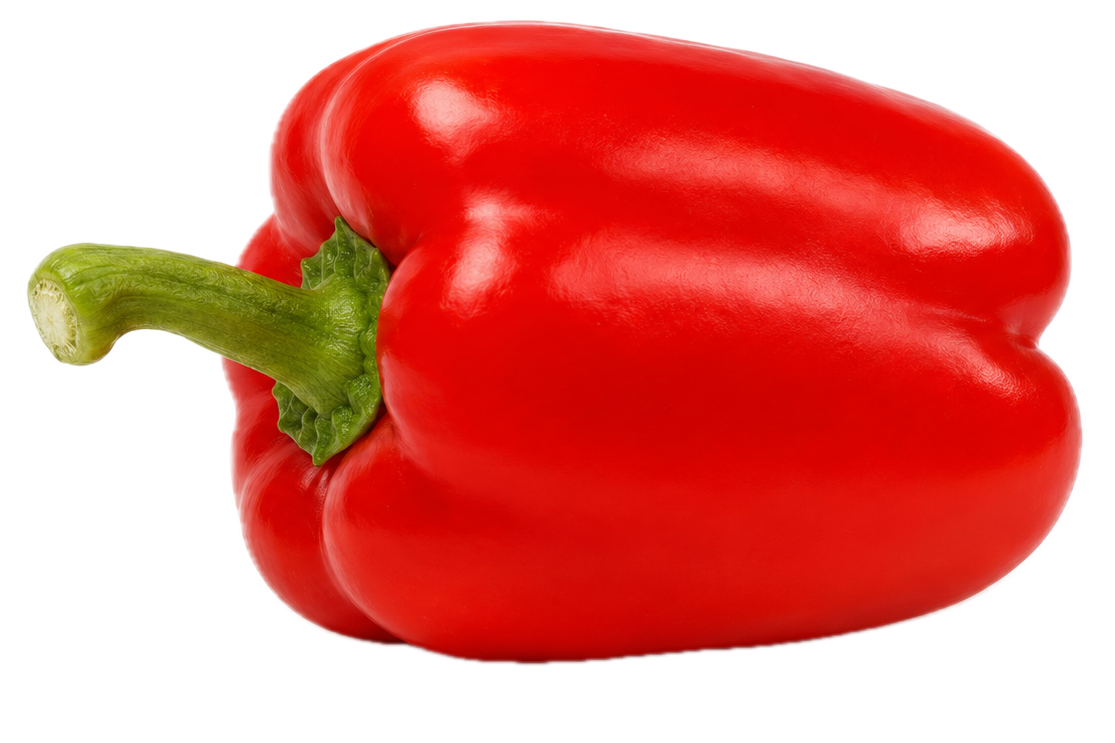
Bell peppers are widely consumed vegetables known for their vibrant colors, crisp texture, and mild, sweet flavor. They are a key commodity in fresh produce markets and are used extensively in culinary applications worldwide. Bell peppers are valued for their visual appeal, nutritional benefits, and versatility in both raw and cooked preparations.
Key Characteristics
Bell peppers are hollow, blocky-shaped fruits with thick, fleshy walls and a glossy outer skin. They are available in multiple colors, including green, red, yellow, and orange, each representing different stages of maturity or specific cultivars. Texture is crisp and juicy when fresh, with flavor ranging from slightly bitter in green peppers to sweet in fully ripened varieties like red and yellow.
Nutritional Value
Bell peppers are rich in vitamin C and also provide vitamin A, vitamin B6, and antioxidants such as carotenoids. They are low in calories and high in water content, making them a healthy addition to a balanced diet. Red bell peppers, in particular, contain higher levels of nutrients due to full ripeness.
Seasonality and Origin
Bell peppers are grown in a variety of climates, including temperate and tropical regions. Major producers include China, Mexico, the United States, and Spain. With greenhouse cultivation and global trade, bell peppers are available year-round in most markets.
Common Applications
• Fresh consumption in salads and platters
• Stir-fries and sautéed dishes
• Stuffed pepper recipes
• Roasting and grilling
• Sauces and salsas
• Pizza and sandwich toppings
Storage and Handling
Proper storage helps maintain freshness and firmness.
• Recommended storage temperature: 45°F to 50°F
• Relative humidity: 90–95%
• Avoid temperatures below 45°F to prevent chilling injury
• Store in ventilated containers or perforated packaging
• Keep dry to prevent decay
• Handle carefully to avoid bruising and skin damage
Origin and Background
Bell peppers originated in Central and South America and were later introduced worldwide through trade. Over time, they have been cultivated into various color types and hybrids to improve yield, flavor, and shelf life. Modern production includes both open-field and greenhouse cultivation to ensure consistent supply.
Grades and Quality Standards
| U.S. Grade Standards | Days Since Shipment | % of Defects Allowed | Optimum Transit Temp. (°F) |
| 10-5-2 | 5 4 3 2 1 | 15-8-4 14-8-4 13-7-3 12-6-2 10-5-2 | 45-55° |
Extra Fancy Grade
• Uniform size and blocky shape
• Bright, consistent color
• Firm texture with thick walls
• Free from blemishes and defects
Fancy Grade
• Minor variations in size and shape
• Slight surface imperfections allowed
• Suitable for retail and wholesale markets
Commercial / Processing Grade
• Visible defects permitted
• May include irregular shapes or sizes
• Used for processing, sauces, and cooked products
Types of Bell Pepper
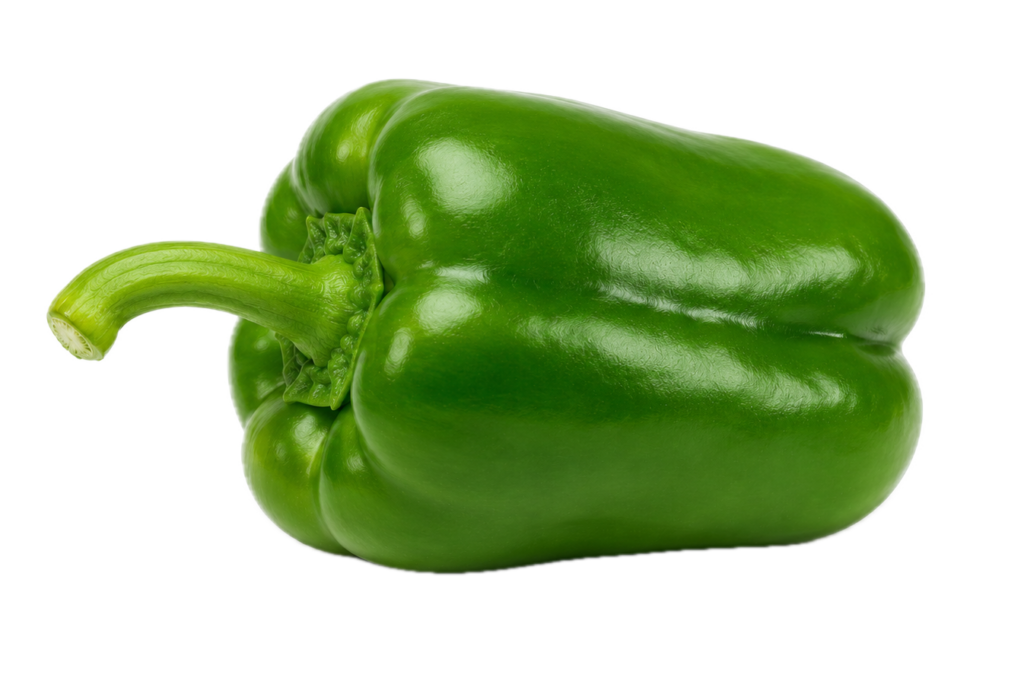
Green
Harvested before full ripeness, green bell peppers have a firm texture and a slightly bitter, grassy flavor. Commonly used in cooking and savory dishes.
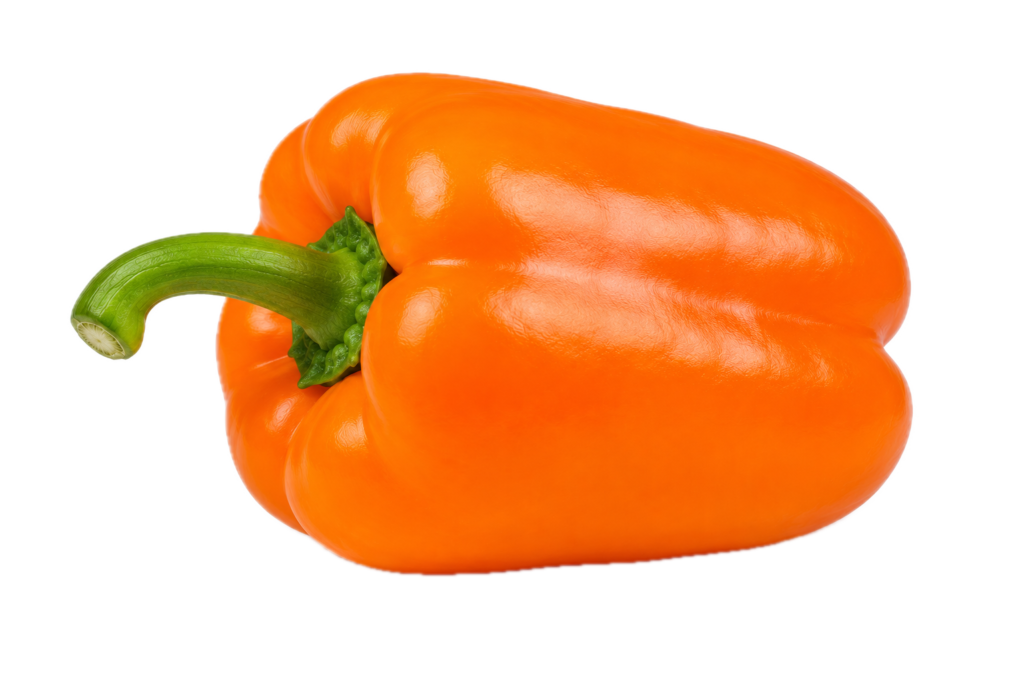
Orange
Orange bell peppers are fully ripened and offer a sweet, fruity flavor. They are often used in salads, snacks, and colorful culinary presentations.
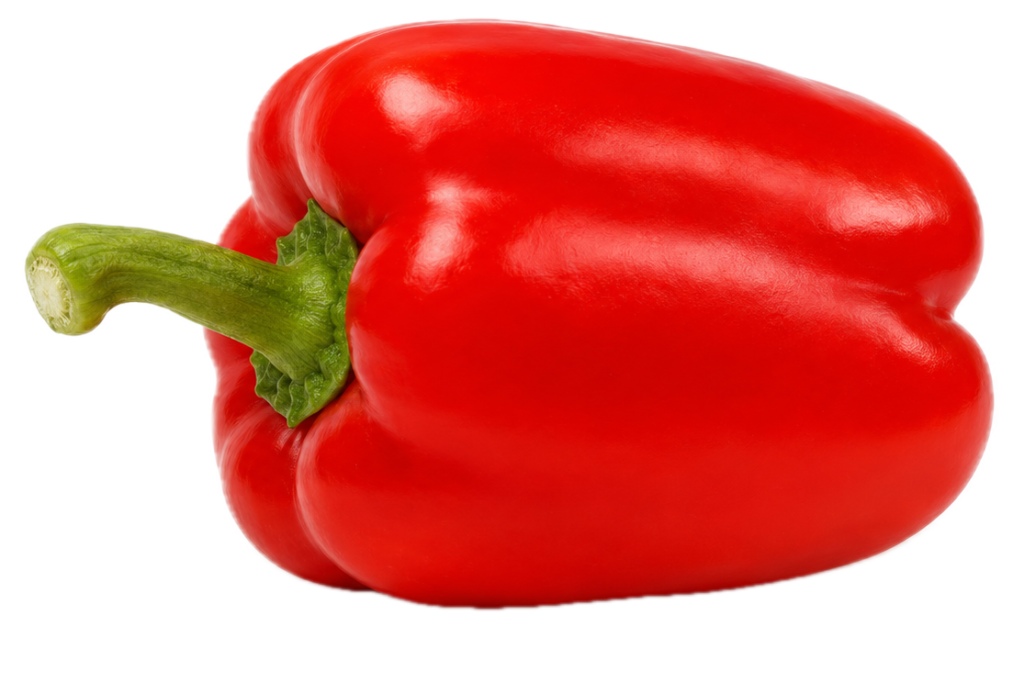
Red
Red bell peppers are fully mature with a rich, sweet flavor and soft texture compared to green varieties. They are widely used in roasting, grilling, and fresh applications.
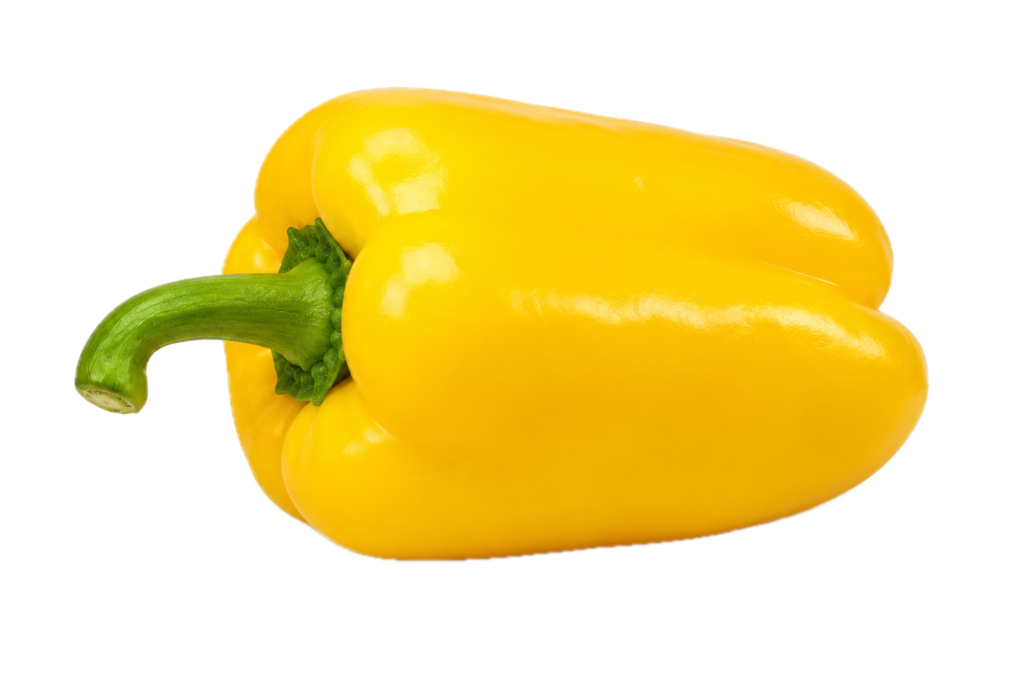
Yellow
Yellow bell peppers have a mild, sweet taste and bright color. They are popular in salads, stir-fries, and as a visually appealing ingredient in dishes.