
Product Overview
Banana leaves are widely used in culinary and food service applications as a natural wrapping, serving, and cooking material. They are valued for their large size, flexibility, and ability to impart a subtle aroma during cooking. Banana leaves are commonly used in traditional cuisines across Asia, Africa, and Latin America, and are also utilized in food presentation and eco-friendly packaging.
Key Characteristics
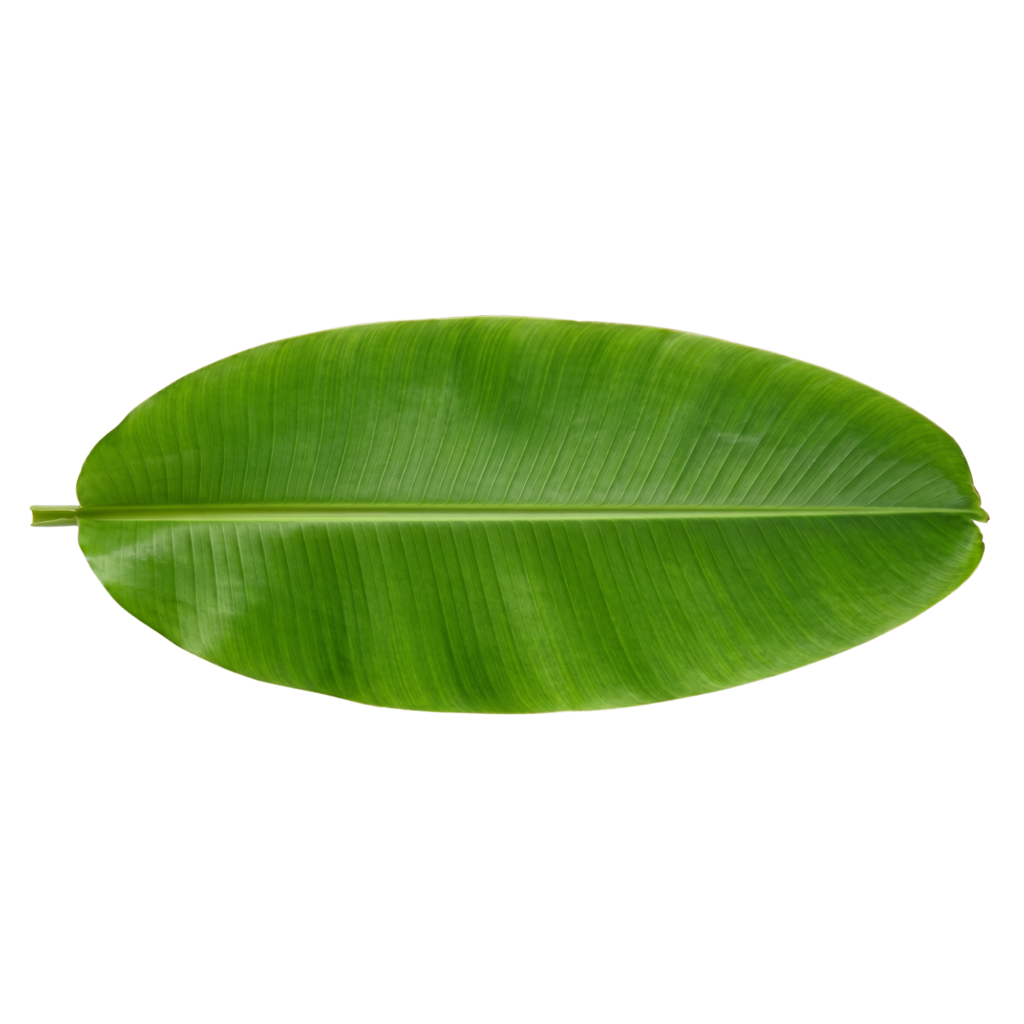
Banana leaves are large, flat, and flexible with a smooth surface and prominent veins. They are typically bright to deep green in color. The texture is sturdy yet pliable when fresh, becoming more flexible when briefly heated. They are not consumed directly but serve as a functional and aromatic component in food preparation.
Nutritional Value
Banana leaves are not consumed as food, but they contribute indirectly by preserving moisture and enhancing aroma during cooking. They are natural, biodegradable, and free from synthetic materials, making them a sustainable alternative for food handling and presentation.
Seasonality and Origin
Banana leaves are available year-round in tropical regions where banana plants are cultivated, including countries such as India, Thailand, Indonesia, and the Philippines. Continuous growth cycles ensure consistent supply in local and export markets.
Common Applications
• Wrapping food for steaming or grilling
• Serving food in traditional settings
• Lining cooking surfaces and trays
• Packaging for takeaway and eco-friendly use
• Cooking dishes such as rice, fish, and meats
• Decorative presentation in catering and events
Storage and Handling
Proper storage helps maintain flexibility and usability.
• Recommended storage temperature: 50°F to 55°F
• Relative humidity: 85–90%
• Store in a cool, dry place or refrigerated if required
• Keep wrapped or covered to prevent drying
• Avoid excessive bending to prevent tearing
• Briefly heat before use to increase flexibility
Origin and Background
Banana leaves have been used for centuries in traditional cooking and food presentation, especially in tropical regions. Their use is deeply rooted in cultural practices and sustainable food handling. Modern usage continues to grow due to increasing demand for eco-friendly alternatives to plastic and synthetic materials.
Grades and Quality Standards
Extra Fancy Grade
• Large, intact leaves
• Bright green color
• Free from tears and blemishes
• Flexible and fresh
Fancy Grade
• Minor tears or surface imperfections
• Slight variations in size and color
• Suitable for general use
Commercial / Processing Grade
• Visible damage or cuts permitted
• Smaller or irregular pieces
• Used for bulk cooking and processing