
Product Overview
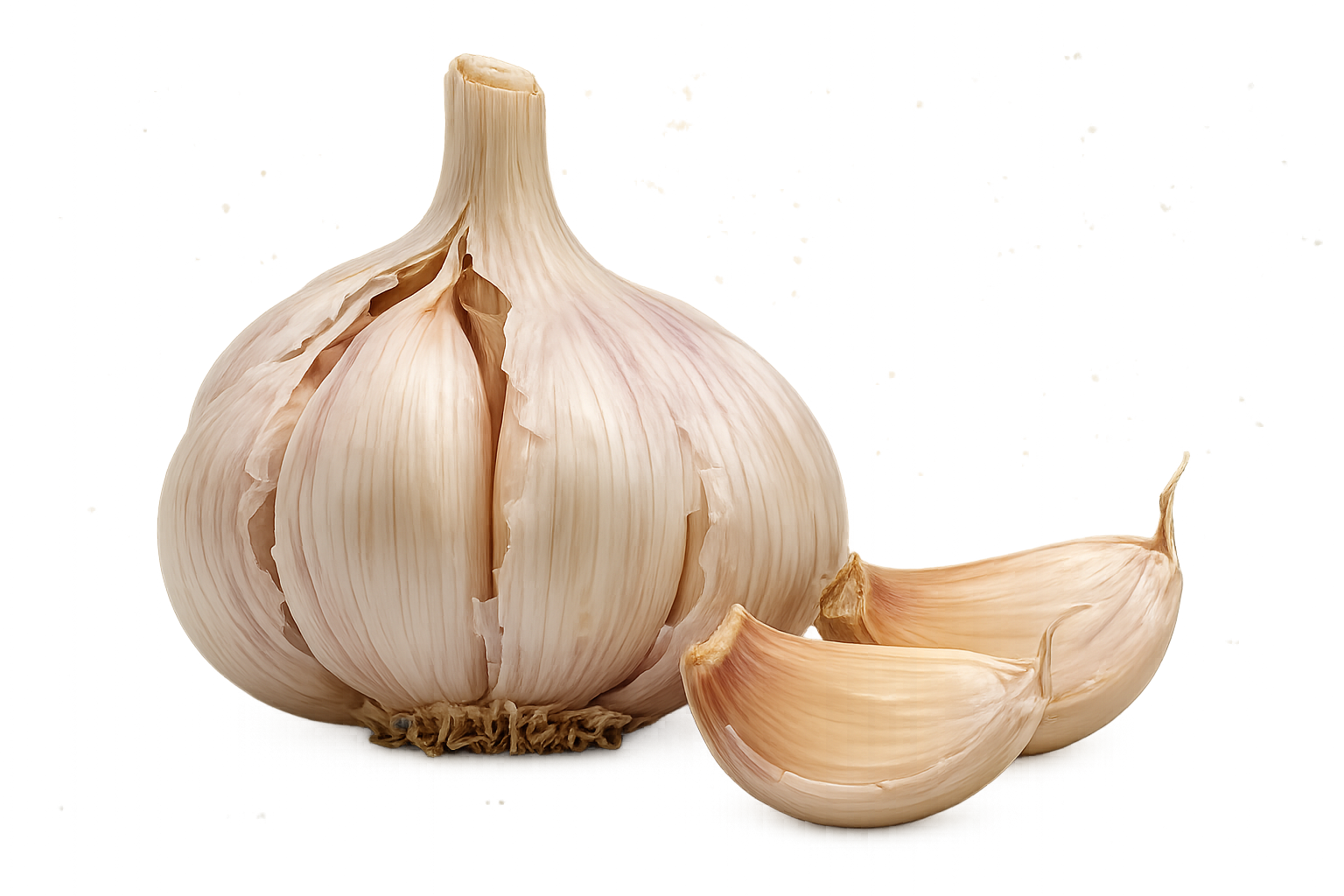
White garlic is the most common commercial garlic variety and a staple ingredient in cuisines worldwide. It is valued for its strong aroma, pungent flavor, and versatility in cooking. White garlic is widely marketed in retail, food service, and food processing sectors and is available year-round.
Key Characteristics
White garlic consists of a bulb made up of multiple cloves enclosed in a papery white outer skin. The cloves are firm, creamy white, and highly aromatic. Flavor is sharp, pungent, and spicy when raw, becoming sweeter and milder when cooked. White garlic is non-climacteric and does not ripen after harvest.
Nutritional Value
White garlic provides vitamin C, vitamin B6, manganese, and dietary fiber. It contains sulfur compounds, including allicin, which contribute to its characteristic aroma and flavor. Garlic also contains antioxidants and small amounts of selenium and potassium.
Seasonality and Origin
White garlic is grown in temperate and subtropical regions and is available year-round due to extensive storage capabilities. Major producing countries include China, India, Egypt, Spain, and Argentina. Global production ensures consistent market availability.
Common Applications
• Fresh cooking
• Sauces and seasonings
• Soups and stews
• Roasting and grilling
• Marinades and dressings
• Food processing applications
Storage and Handling
Proper storage is essential to maintain quality and prevent sprouting.
• Recommended storage temperature: 32°F to 36°F
• Relative humidity: 60–70%
• Shelf life: Several months under optimal conditions
• Store in a cool, dry, and well-ventilated area
• Avoid excessive moisture accumulation
• Protect from direct sunlight
• Handle carefully to prevent clove damage
Origin and Background
Garlic is believed to have originated in Central Asia and has been cultivated for thousands of years. White garlic became the dominant commercial variety due to its strong flavor, long storage life, and adaptability to different growing regions. It remains one of the most important flavoring ingredients worldwide.
Grades and Quality Standards
Extra Fancy Grade
• Uniform bulb size and shape
• Clean white outer skin
• Firm cloves free from sprouting and defects
Fancy Grade
• Slight variations in size and appearance
• Minor cosmetic imperfections allowed
• Suitable for retail distribution
Commercial / Processing Grade
• Visible defects permitted
• Maintains internal quality
• Used for processing, seasoning products, and bulk foodservice applications