
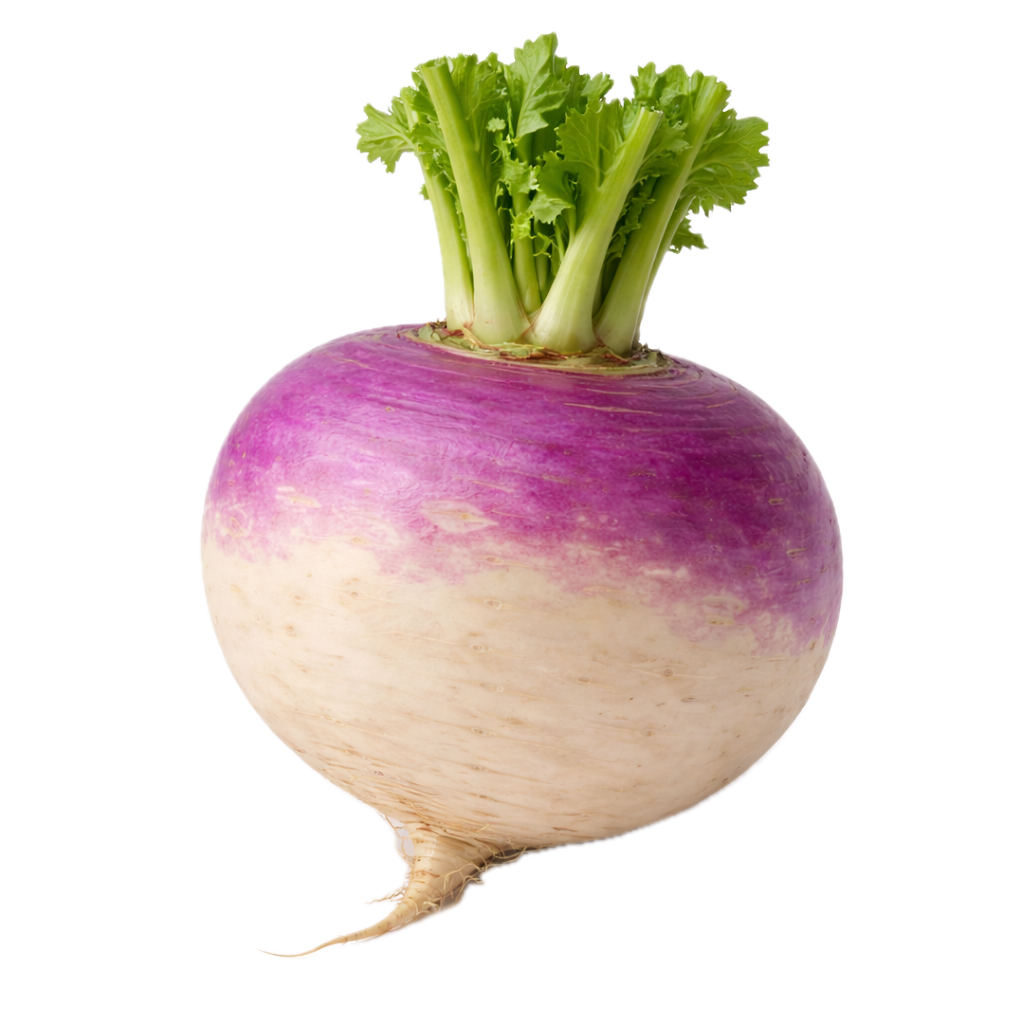
Product Overview
Turnips are a widely cultivated root vegetable valued for their mild flavor, versatility, and dual-purpose use of both roots and leafy greens. They are an important commodity in fresh produce markets, serving retail and food service sectors. Turnips are consumed both raw and cooked and are commonly used in a variety of traditional and modern dishes.
Key Characteristics
Turnips are round to slightly flattened roots with smooth skin that is typically white with a purple or green top depending on sun exposure. The flesh is firm, crisp, and white with a mildly sweet and slightly peppery flavor. Texture becomes softer and sweeter when cooked. Turnips are non-climacteric and do not ripen after harvest.
Nutritional Value
Turnips are low in calories and provide dietary fiber. They are a good source of vitamin C and contain small amounts of potassium and calcium. Turnip greens are also highly nutritious, offering vitamins A, C, and K along with antioxidants.
Seasonality and Origin
Turnips are grown in temperate climates and are available year-round due to staggered planting cycles. Major producing regions include Europe, North America, and Asia. They are commonly harvested during cooler seasons but are widely available through storage and continuous cultivation.
Common Applications
• Fresh consumption (raw slices and salads)
• Boiling and mashing
• Roasting and sautéing
• Soups and stews
• Pickling
• Use of greens in cooking
Storage and Handling
Proper storage helps maintain firmness and prevent moisture loss.
• Recommended storage temperature: 32°F
• Relative humidity: 95–100%
• Shelf life: 2–3 weeks under optimal conditions
• Remove tops before storage to reduce moisture loss
• Store in moisture-retentive packaging
• Handle carefully to prevent bruising
• Keep away from ethylene-producing commodities
Origin and Background
Turnips are believed to have originated in Europe and Asia and have been cultivated for thousands of years. They have historically been an important staple crop and continue to be widely grown worldwide. Modern cultivation focuses on improving root uniformity, flavor, and storage life.
Grades and Quality Standards
| U.S. Grade Standards | Days Since Shipment | % of Defects Allowed | Optimum Transit Temp. (°F) |
| 10-5-1 | 5 4 3 2 1 | 15-8-3 14-8-3 13-7-2 11-6-1 10-5-1 | 32° |
Extra Fancy Grade
• Uniform size, shape, and color
• Smooth skin free from blemishes
• Firm and fresh texture
Fancy Grade
• Slight variations in size and appearance
• Minor surface imperfections allowed
• Suitable for retail distribution
Commercial / Processing Grade
• Visible defects permitted
• May include irregular shapes or surface damage
• Used for processing and bulk applications