
Product Overview
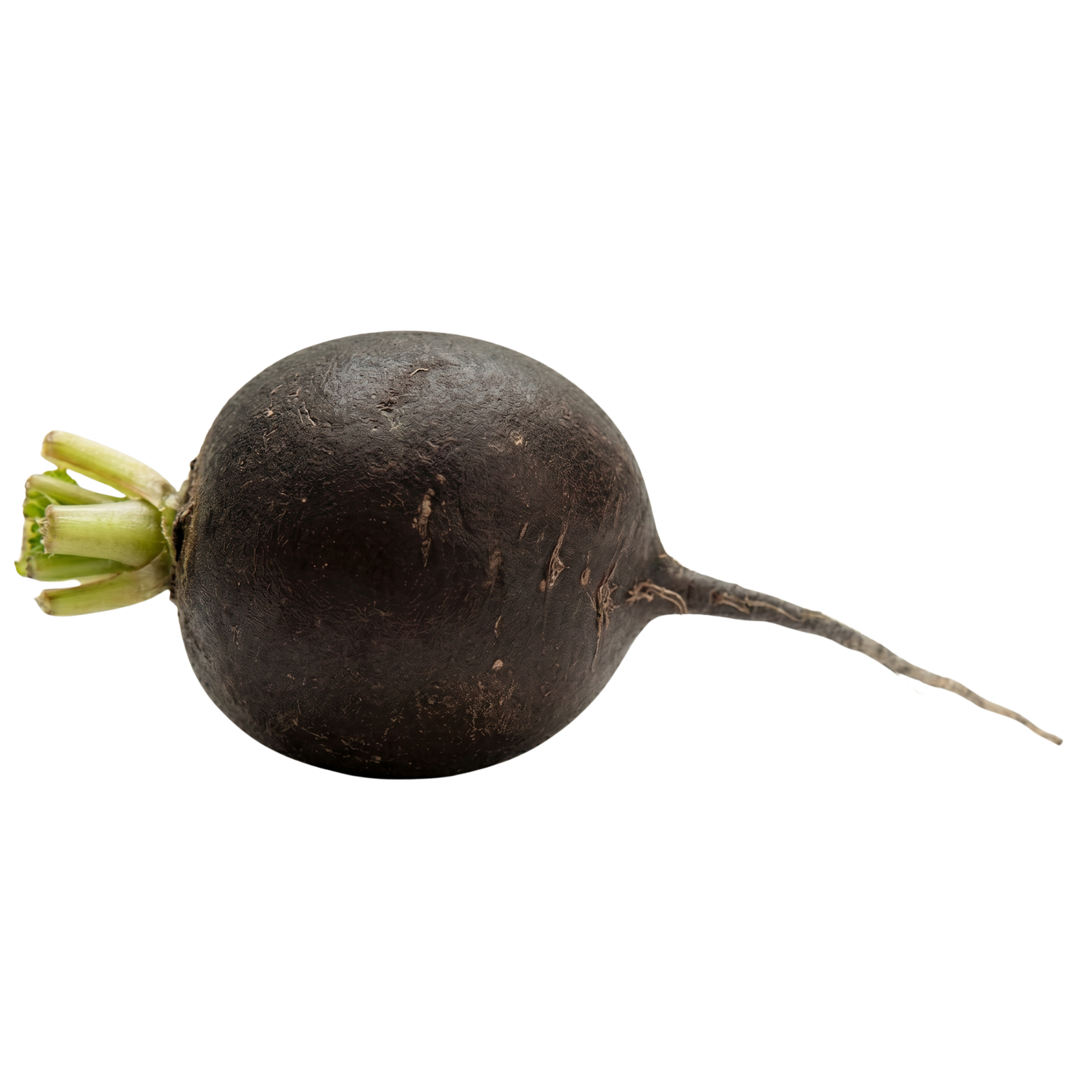
Black radish is a specialty root vegetable belonging to the Raphanus sativus species, valued for its distinctive black skin, firm texture, and robust peppery flavor. It is one of the oldest cultivated radish varieties and is widely utilized in fresh market, culinary, and specialty produce applications. Black radishes are popular in European, Middle Eastern, and gourmet markets due to their unique appearance, storage capability, and strong flavor profile.
Key Characteristics
Black radishes are round to elongated roots with a rough, dark brown to black exterior and crisp white flesh. The flesh is dense, firm, and considerably more pungent than common red radishes. Flavor is sharp, earthy, and peppery, becoming milder when cooked. The roots are highly durable and possess excellent storage characteristics, making them suitable for extended distribution and marketing.
Nutritional Value
Black radishes are low in calories and provide dietary fiber, vitamin C, folate, and potassium. They also contain naturally occurring sulfur compounds, antioxidants, and phytonutrients that contribute to their characteristic flavor and nutritional value. Their high water content and nutrient density support their use in healthy dietary applications.
Seasonality and Origin
Peak Season: Fall through Winter
Black radishes are cultivated primarily in temperate climates. Major production regions include France, Germany, Poland, Russia, Turkey, and parts of the United States. Due to their excellent storage capability, black radishes remain available for extended periods after harvest and are commonly marketed throughout the winter season.
Common Applications
• Fresh salads and slaws
• Specialty vegetable platters
• Pickled products
• Soups and stews
• Roasted and braised dishes
• Gourmet culinary applications
• Traditional European cuisine
Storage and Handling
Proper storage is essential to maintain texture and extend shelf life.
• Recommended storage temperature: 32°F to 34°F
• Relative humidity: 95–100%
• Shelf life: 2–4 months under optimal conditions
• Remove tops before storage to reduce moisture loss
• Store in a refrigerated, high-humidity environment
• Avoid freezing temperatures that may damage texture
• Handle carefully to prevent bruising and skin injury
• Maintain adequate ventilation during storage and transport
Origin and Background
Black radishes are believed to have originated in Eastern Europe and Western Asia, where they have been cultivated for centuries. Historically, they were valued for their storage longevity and ability to provide fresh produce during winter months. Over time, black radishes became established in European and Middle Eastern cuisines. Modern cultivation focuses on root uniformity, flavor quality, disease resistance, and postharvest performance while preserving the variety’s traditional characteristics.
Grades and Quality Standards
Extra Fancy Grade
• Uniform size, shape, and black coloration
• Firm texture with crisp white flesh
• Smooth to moderately rough skin with excellent appearance
• Free from cracks, bruising, decay, and insect damage
• High internal quality and flavor
Fancy Grade
• Slight variations in size, shape, and appearance permitted
• Minor cosmetic imperfections allowed
• Suitable for retail and food service distribution
Commercial / Processing Grade
• Greater variation in appearance and size allowed
• May contain minor surface defects or cosmetic blemishes
• Used for fresh-cut products, processing, pickling, and food manufacturing applications