
Product Overview
Jicama is a tropical root vegetable widely used in fresh and culinary applications, valued for its crisp texture, mild sweetness, and versatility. It is an important commodity in both retail and food service sectors, particularly in Latin American and Asian cuisines. Jicama is typically marketed fresh and consumed raw or cooked.
Key Characteristics
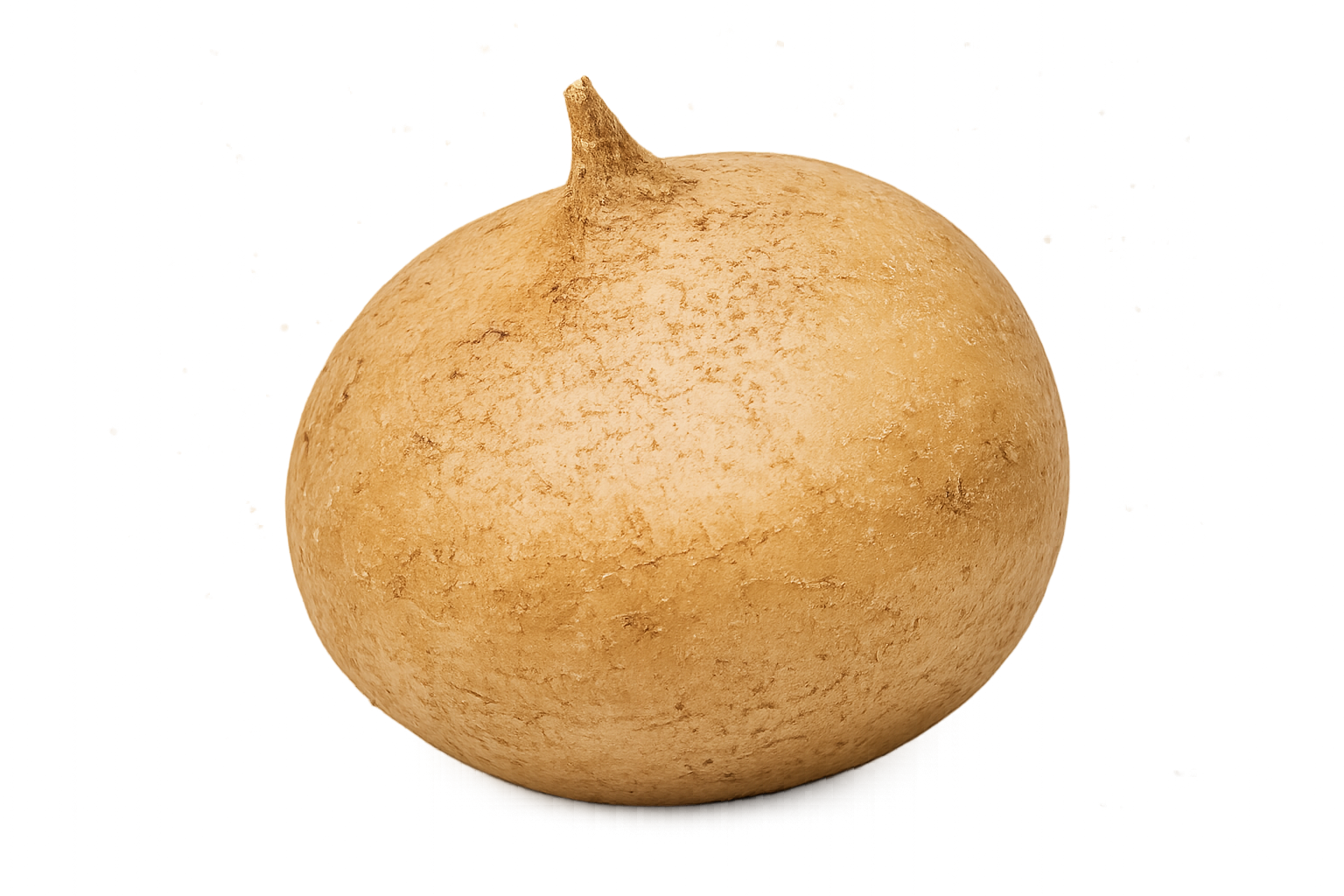
Jicama is a round to bulbous root with a rough, brown, fibrous outer skin and white interior flesh. The flesh is firm, crisp, and juicy with a mild, slightly sweet flavor similar to a combination of apple and pear. It does not discolor quickly when cut compared to other root vegetables. Jicama is non-climacteric and does not ripen after harvest.
Nutritional Value
Jicama is low in calories and rich in dietary fiber, particularly inulin, which supports digestive health. It provides vitamin C and contains small amounts of potassium and other nutrients. Its high water content contributes to hydration.
Seasonality and Origin
Jicama is grown in tropical and subtropical regions and is available year-round due to continuous cultivation. Major producing countries include Mexico, the Philippines, China, and parts of Southeast Asia. Its long shelf life supports consistent availability in markets.
Common Applications
• Fresh consumption (raw slices and snacks)
• Salads and slaws
• Stir-fries
• Soups and stews
• Pickling
• Traditional dishes
Storage and Handling
Proper storage helps maintain crispness and prevent moisture loss.
• Recommended storage temperature: 55°F to 60°F
• Relative humidity: 85–90%
• Shelf life: 2–4 weeks under optimal conditions
• Store in a cool, dry, and well-ventilated area
• Avoid excessive moisture to prevent decay
• Handle carefully to prevent cuts and bruising
• Refrigerate once cut and cover properly
Origin and Background
Jicama is believed to have originated in Mexico and Central America and has been cultivated for centuries. It spread to Asia through trade and is now widely used in various cuisines. Modern production focuses on improving yield, uniformity, and resistance to pests and diseases.
Grades and Quality Standards
Extra Fancy Grade
• Uniform size, shape, and clean surface
• Firm texture with no cracks or decay
• Smooth skin with minimal blemishes
Fancy Grade
• Slight variations in size and appearance
• Minor surface imperfections allowed
• Suitable for retail distribution
Commercial / Processing Grade
• Visible defects permitted
• May include irregular shapes or surface damage
• Used for processing and bulk applications