
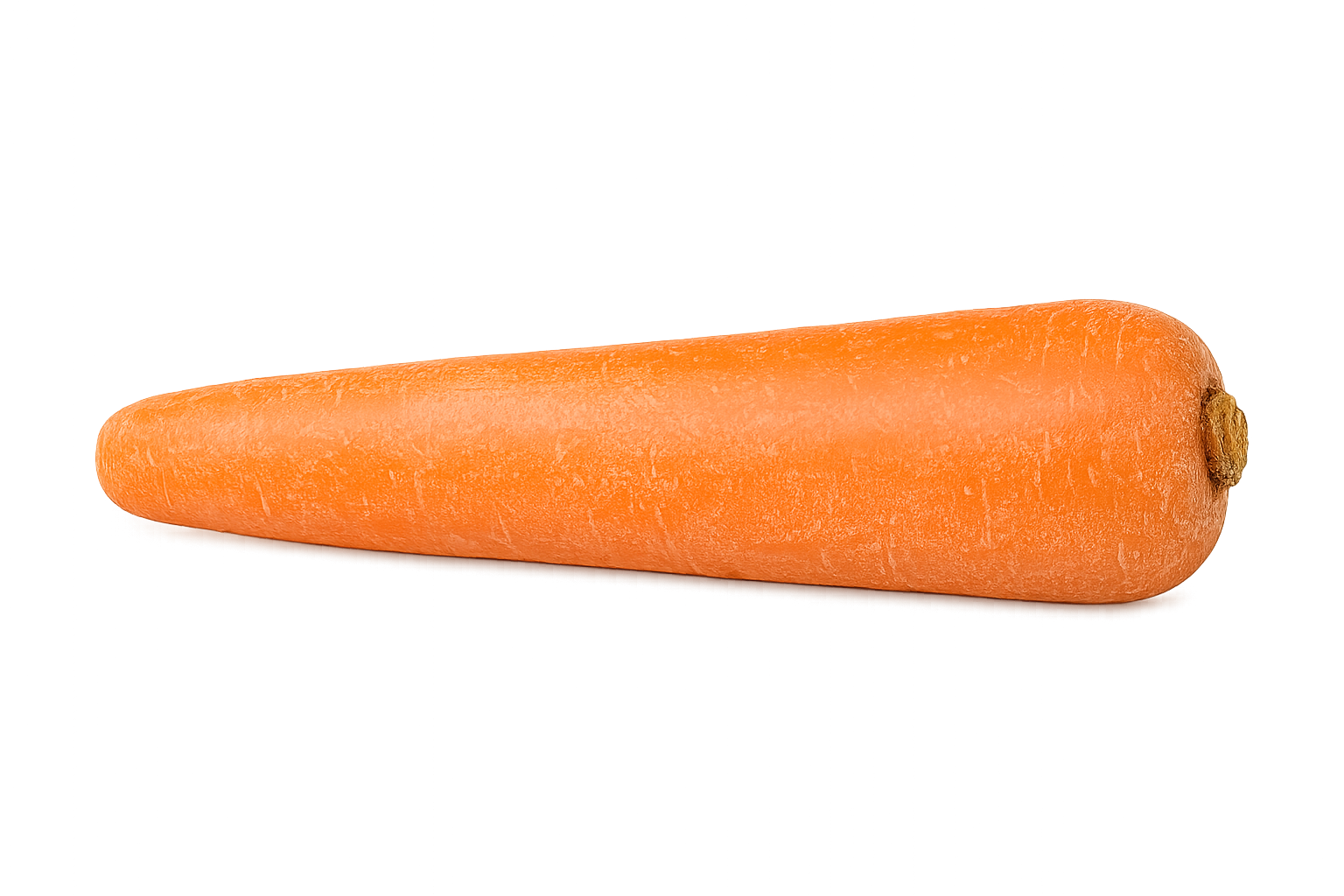
Product Overview
Carrots are one of the most widely consumed root vegetables globally, valued for their versatility, nutritional benefits, and long shelf life. They are a key commodity in both fresh and processed markets, serving retail and food service sectors. Carrots are commonly marketed in various forms, including whole, baby-cut, and processed products.
Key Characteristics
Carrots are elongated, tapered roots with a smooth outer skin and a crisp texture. They are typically bright orange in color, although other colors exist. The flesh is firm, crunchy, and slightly sweet. Flavor is mild and earthy with natural sweetness. Carrots are non-climacteric and do not ripen after harvest.
Nutritional Value
Carrots are rich in beta-carotene, which converts to vitamin A in the body. They also provide dietary fiber, vitamin K, and potassium. Carrots contain antioxidants that support eye health and overall well-being. They are low in calories and widely considered a healthy vegetable.
Seasonality and Origin
Carrots are grown in temperate regions and are available year-round due to staggered planting and storage. Major producing countries include China, the United States, India, and Russia. Their long storage capability supports consistent supply in global markets.
Common Applications
• Fresh consumption
• Salads and slaws
• Cooking (steaming, roasting, boiling)
• Soups and stews
• Juices and beverages
• Processed products (baby carrots, frozen, canned)
Storage and Handling
Proper storage is essential to maintain crispness and prevent moisture loss.
• Recommended storage temperature: 32°F
• Relative humidity: 95–100%
• Shelf life: 2–4 weeks or longer under optimal conditions
• Remove tops before storage to reduce moisture loss
• Store in moisture-retentive packaging
• Avoid exposure to ethylene-producing commodities
• Handle carefully to prevent breakage
Origin and Background
Carrots are believed to have originated in Central Asia and have been cultivated for thousands of years. Early varieties were purple and yellow, with orange varieties developed later through selective breeding. Today, carrots are a staple vegetable worldwide, with production focused on improving sweetness, uniformity, and storage life.
Grades and Quality Standards
| U.S. Grade Standards | Days Since Shipment | % of Defects Allowed | Optimum Transit Temp. (F) |
| 10-5-1 | 5 4 3 2 1 | 15-8-3 14-8-3 13-7-2 12-6-1 10-5-1 | 32° |
Extra Fancy Grade
• Uniform size, shape, and bright color
• Smooth surface free from cracks or defects
• Firm and crisp texture
Fancy Grade
• Slight variations in size and appearance
• Minor surface imperfections allowed
• Suitable for retail distribution
Commercial / Processing Grade
• Visible defects permitted
• May include irregular shapes or surface damage
• Used for processing and bulk applications