
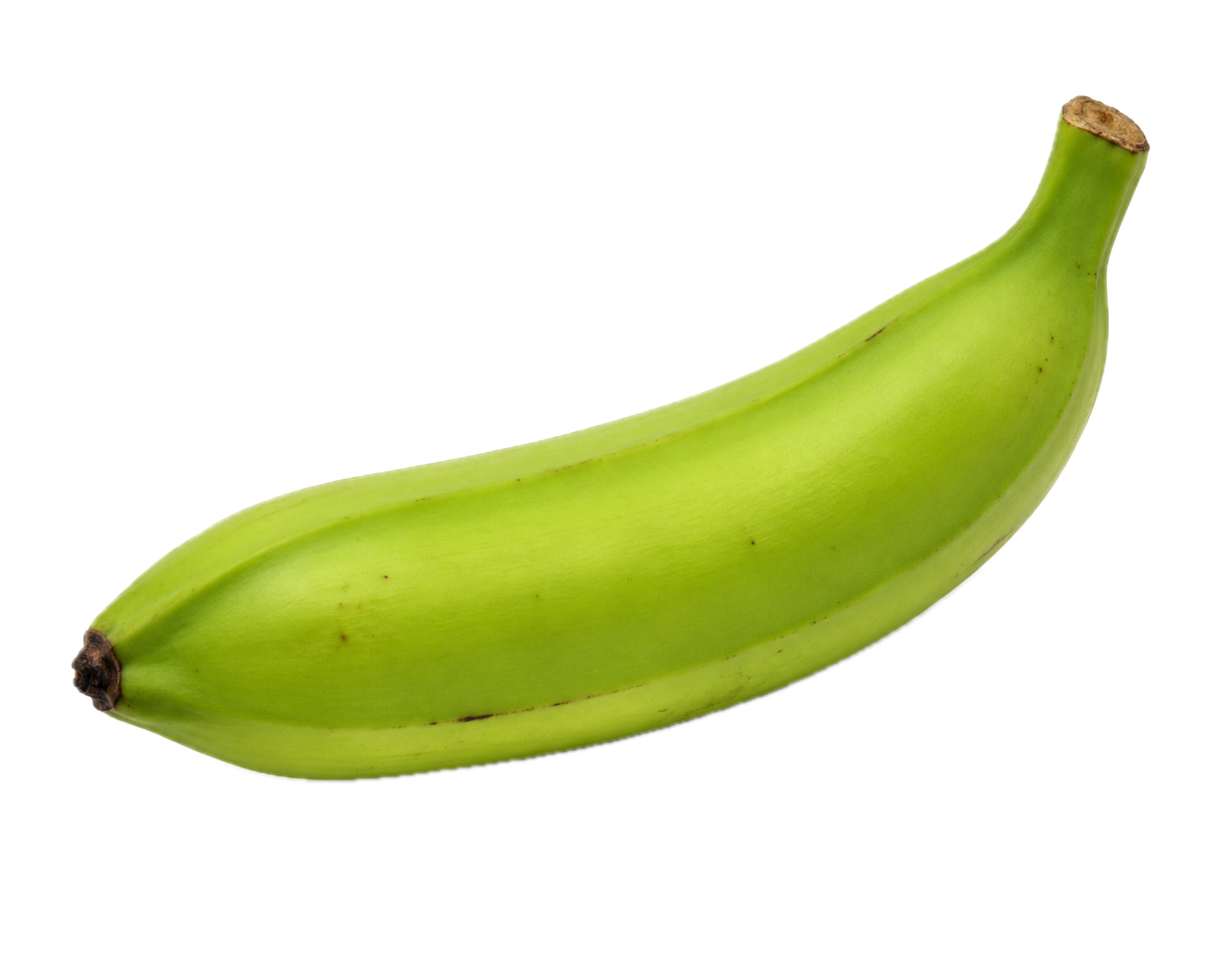
Product Overview
Plantains are a staple tropical fruit widely traded in global produce markets, primarily used as a cooking banana rather than for fresh sweet consumption. They are valued for their starchy texture, versatility, and importance in traditional cuisines across Africa, Latin America, and the Caribbean. Plantains are marketed fresh and are a key commodity in both retail and food service sectors.
Key Characteristics
Plantains are larger and thicker than dessert bananas, with a firmer texture and thicker peel. The skin transitions from green to yellow and eventually black as it ripens. The flesh is starchy when unripe and becomes softer and sweeter as it matures. Flavor ranges from neutral and starchy to mildly sweet depending on ripeness. Plantains are climacteric fruits and continue to ripen after harvest.
Nutritional Value
Plantains are a rich source of carbohydrates and dietary fiber. They provide vitamin C, vitamin A, and vitamin B6. They also contain potassium and small amounts of magnesium. Their higher starch content makes them an important energy source in many diets.
Seasonality and Origin
Plantains are grown in tropical regions and are available year-round due to continuous production. Major producing countries include Uganda, Ghana, Nigeria, Colombia, Ecuador, and India. Their widespread cultivation ensures consistent supply in both local and international markets.
Common Applications
• Frying (chips, tostones)
• Boiling and mashing
• Baking and roasting
• Curries and stews
• Traditional dishes across cuisines
• Processed snacks
Storage and Handling
Proper handling is essential to control ripening and maintain quality.
• Recommended storage temperature: 56°F to 60°F
• Avoid temperatures below 55°F to prevent chilling injury
• Relative humidity: 90–95%
• Shelf life: 1–3 weeks depending on ripeness
• Ripen at room temperature
• Handle carefully to prevent bruising
• Store away from ethylene-sensitive produce during ripening
Origin and Background
Plantains originated in Southeast Asia and were later spread to Africa and the Americas through trade and migration. They have become a staple food in many tropical regions due to their adaptability and high yield. Modern production focuses on improving disease resistance, yield consistency, and suitability for export markets.
Grades and Quality Standards
Extra Fancy Grade
• Uniform size, shape, and color
• Free from blemishes, bruising, and defects
• Proper maturity and firmness
Fancy Grade
• Minor variations in size and appearance
• Slight cosmetic imperfections allowed
• Suitable for retail distribution
Commercial / Processing Grade
• Visible defects permitted
• Maintains internal quality
• Used for cooking and processing applications